

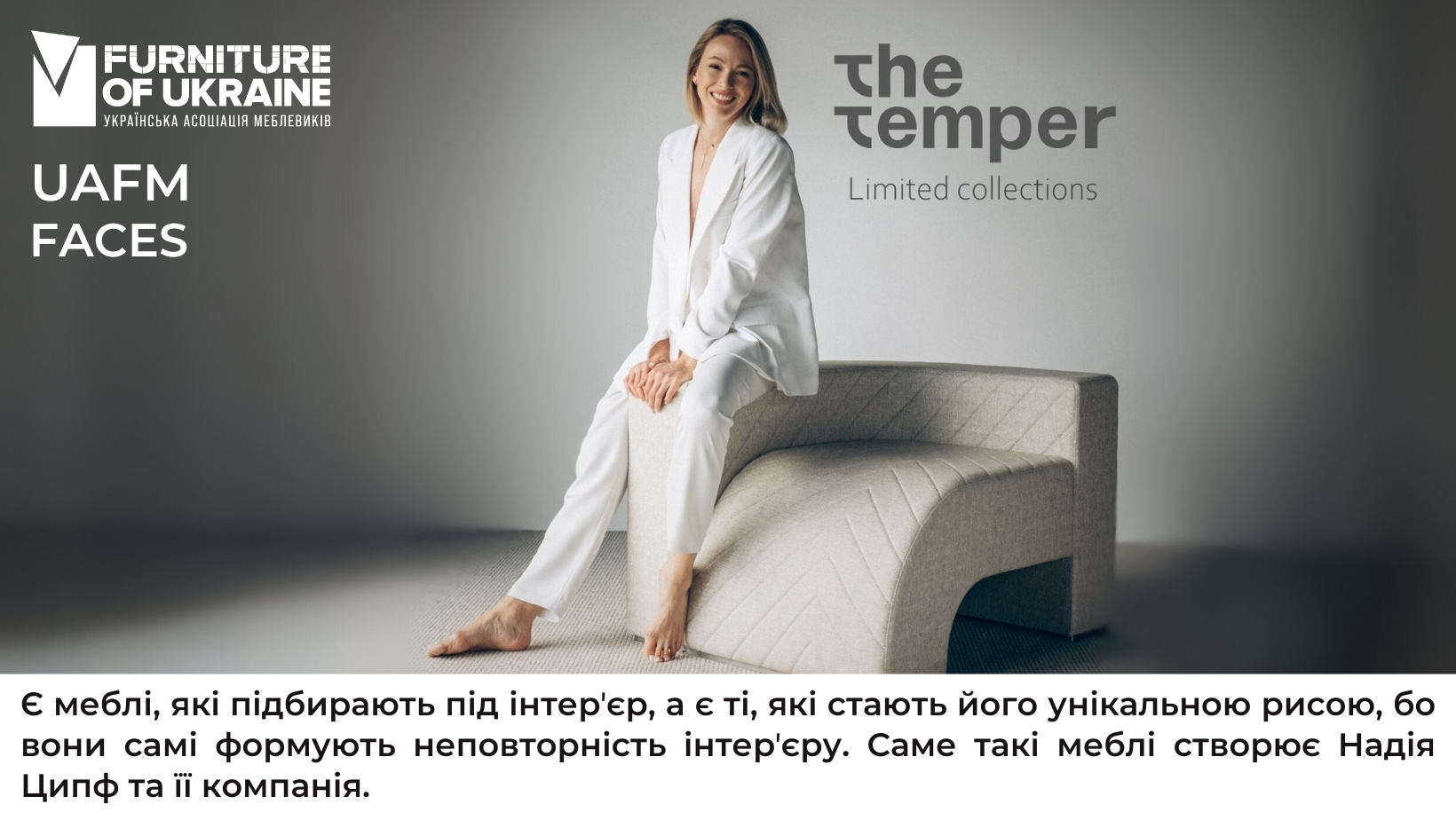
UAFM in Faces: an іnterview with the owner of “The Temper” and designer Nadiia Tsypf.
The Temper is a developer and manufacturer of designer (custom) upholstered furniture for businesses: bars, restaurants, cafes, hotels, and more. The concept of “custom furniture” implies exclusivity, non-mass production, limited editions, and, as they say, “character.” Nadiia Tsypf, the company owner (and the designer of most of the models due to her professional background), adds another descriptor: boldness. She explains that this means her furniture often goes beyond conventional boundaries, expands the frameworks of current trends, and serves as a pioneer in furniture fashion. Some furniture is chosen to complement an interior, while other pieces define it, becoming the unique hallmark of the space. This is precisely the kind of furniture Nadiia Tsypf and her company create. When a designer imparts a piece of their individuality and creative temperament into their creations, such items are challenging to replicate fully and are thus considered truly unique.
Nadiia and her team took a bold step by working in a narrow, limited, and demanding niche of the furniture market. It’s not every café or hotel owner willing to furnish their space with custom furniture (which also means more expensive), especially in establishments where the furniture will endure intensive and not always careful use. Only the most forward-thinking entrepreneurs understand that such furnishing is an essential image factor that attracts visitors and, consequently, increases revenue. These are the clients The Temper targets.
– The market downturn caused by the war,” explains the company’s head, “forces us to seek new ways to win the hearts and minds of potential clients. For example, I’ve started actively using my profile on the most popular social networks to share expert insights about furniture and interior design, style features, current trends, and the advantages of our brand. By drawing attention to myself and the topics I raise, including social issues, I simultaneously showcase my custom furniture and completed projects by the company. This approach helps drive sales.
The Temper places a significant emphasis on inclusivity and accessibility. The company is also committed to employing people with various disabilities, including veterans injured in the war.
I’ll soon launch a new initiative to highlight the importance of creating inclusive spaces in public establishments. Of course, furniture for people with special needs must be primarily comfortable.
– How has running your business changed during the war?
– It has definitely changed. If finding clients was the main challenge for furniture entrepreneurs before, now the focus is on how to fulfill the orders that already exist or may come in. This includes overcoming obstacles such as staffing shortages and energy supply disruptions.
How can one grow a company under such conditions when all efforts are directed at merely staying afloat? For me, these unfavorable circumstances are doubly challenging as they drain my inspiration and prevent me from focusing on creative design. Running a small company makes it particularly hard for the leader, as they must juggle multiple roles—designing models, working as a designer, constructor, and technologist, implementing production, and acting as a manager and salesperson. That’s exactly the situation I find myself in now, filled with creative ideas that I don’t know when I’ll be able to bring to life.
– The niche you furnish is indeed demanding. Custom furniture for HoReCa requires both unique design and a high level of durability and wear resistance.
– That’s precisely how we design it. We are meticulous in selecting materials—for frames, upholstery, and stitching. For example, our frames are made of plywood rather than particleboard, and we use exclusively certified foam that doesn’t sag even after eight years of intensive furniture use.
Another feature we pay great attention to is ergonomics, ensuring the furniture is comfortable and convenient to use.
The final version of a piece is achieved through close collaboration with the client, who often has a general idea but doesn’t know how to execute it in detail. My task is to help them specify their request and shape the technical requirements.
– But not all completed projects are of your own design, are they?
– Correct. We also enjoy working with freelance designers, as they bring their clients to us. They usually have just an idea or a general vision of the object, and we work together to detail the project and oversee its practical implementation. With my experience, I understand what type of furnishing is most suitable for various public spaces.
– Thank you for the interview. Best wishes for the holidays and success in your future endeavors.
