The “Made in Ukraine” project
On Monday, April 29th, a significant event for Ukrainian business and the economy as a whole took place. At a meeting dedicated to the “Made in Ukraine” project, representatives of various companies discussed the results and prospects of the campaign, the positioning of domestic production, and tools for its labeling.
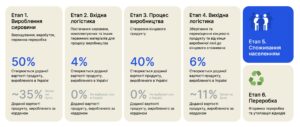
Ukraine aims to become economically independent and self-sufficient. However, in recent years, there has been a trend towards an increasing share of the raw materials sector in the GDP structure. The current situation necessitates exploring alternative paths of development, as opportunities to increase the production volumes of primary raw materials are nearly exhausted.
At the same time, increasing the yield of agricultural crops is not easy due to challenges caused by the war and logistics problems. Consequently, economic growth through the exploitation of raw resources is becoming increasingly difficult.
The Ministry of Economy has proposed a response – to move towards creating greater value added within the country across various sectors, which has become the conceptual basis of the “Made in Ukraine” project.
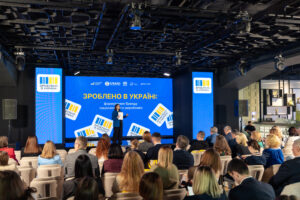
Nadiya Bigun, Deputy Minister of Economy, emphasized the main goal of the platform:
“When we were thinking about the ‘Made in Ukraine’ project and how we can support local production in these challenging times, we began to look at it from the demand side. That is, if there is demand for goods made in Ukraine, then supply will increase accordingly. Because strengthening the economy solely through raw materials is no longer an option. That’s why the platform actually consists of two conceptual components:
- Stimulating demand (advertising, motivating consumers to build a logic of why Ukrainian goods mean money in the budget: for the army, healthcare, education, etc.)
- Supporting and developing producers (we must meet our needs, achieving independence from partners, creating greater added value within the country)”
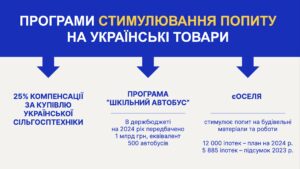
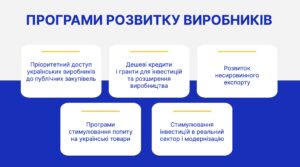
To support Ukrainian producers, a number of tools are provided:
- Priority access to public procurement;
- Cheap loans and grants for investment and production expansion;
- Support for non-raw material exports;
- Programs to stimulate demand and encourage investment in the real sector of the economy.
Initiatives such as:
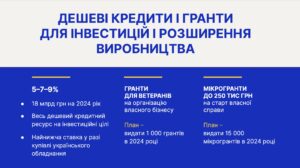
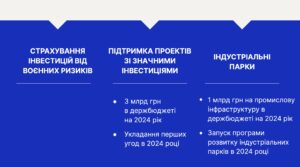
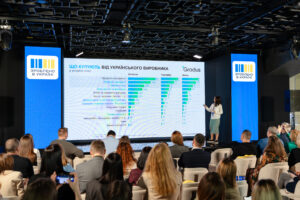
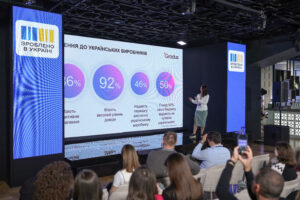
Gradus Research revealed that Ukrainians generally trust domestic producers and buy their products (in particular, 90% of respondents consume food products, 74% – medicines, 52% – hygiene products, 46% – clothing, footwear, and accessories, 32% – furniture and household items of Ukrainian production). However, there is potential for growth, as only 46% prefer exclusively Ukrainian goods, and half spend over 60% of their budget on purchasing national products.
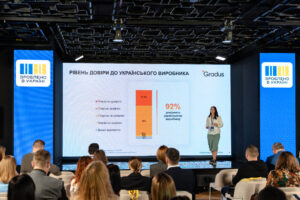
So join the all-Ukrainian “Made in Ukraine” platform!
To do this:
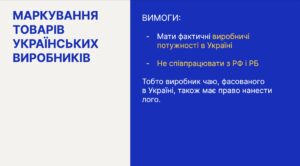
- Go to the website madeinukraine.gov.ua;
- Fill out the form for entrepreneurs;
- Download the brand book;
- Familiarize yourself with recommendations for logo placement.
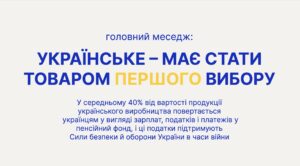
Ukrainian products should become the first choice, and the realization of the advantages of domestic production is the key to the country’s economic revival.
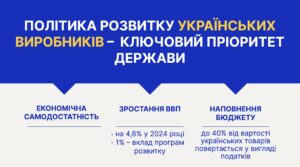
“Everyone benefits when it’s made in Ukraine, as on average up to 40% of the value of Ukrainian goods returns to the country’s budget.”