

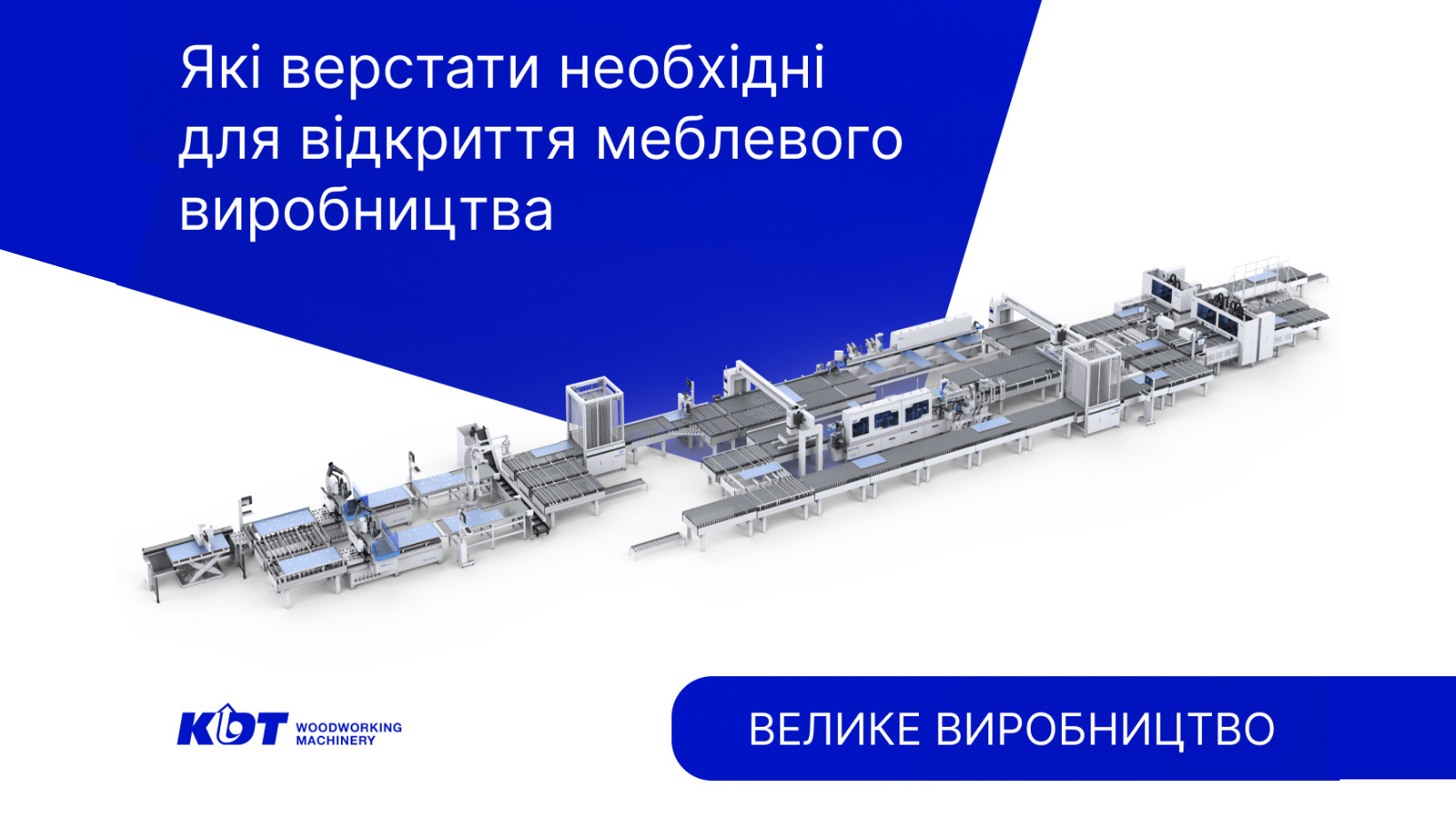
What machinery is needed to set up a large-scale furniture manufacturing facility
Large-scale manufacturing facilities are distinguished by their uncompromising approach and scale. Every process is carefully planned to achieve maximum productivity. Unlike small and medium-sized manufacturers, large companies are not constrained by space or budget, allowing them to use the most advanced equipment and automated systems.
.
.
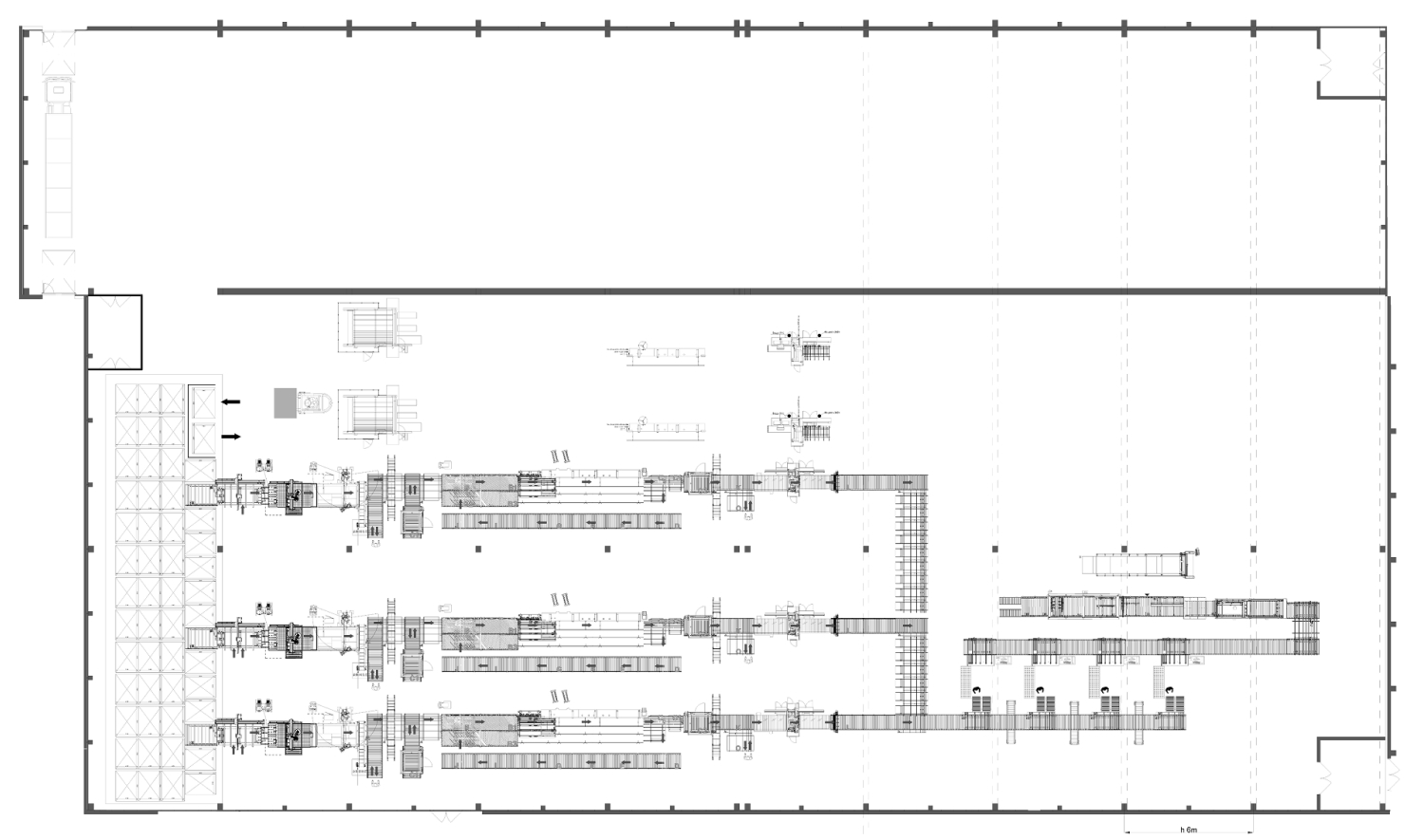
For any manufacturing facility, it is advisable to develop a detailed workshop layout showing the placement of equipment. For a large-scale facility, however, this is not merely a recommendation but a necessity. The layout defines the positioning of machines, conveyors, and other equipment, helping to optimise the movement of components, minimise equipment downtime, and improve overall productivity.
When designing the production process, the specialists in our automation department follow the principles of maintaining the correct sequence of technological operations, optimising the workspace, ensuring convenient staff movement, and complying with established technical standards.
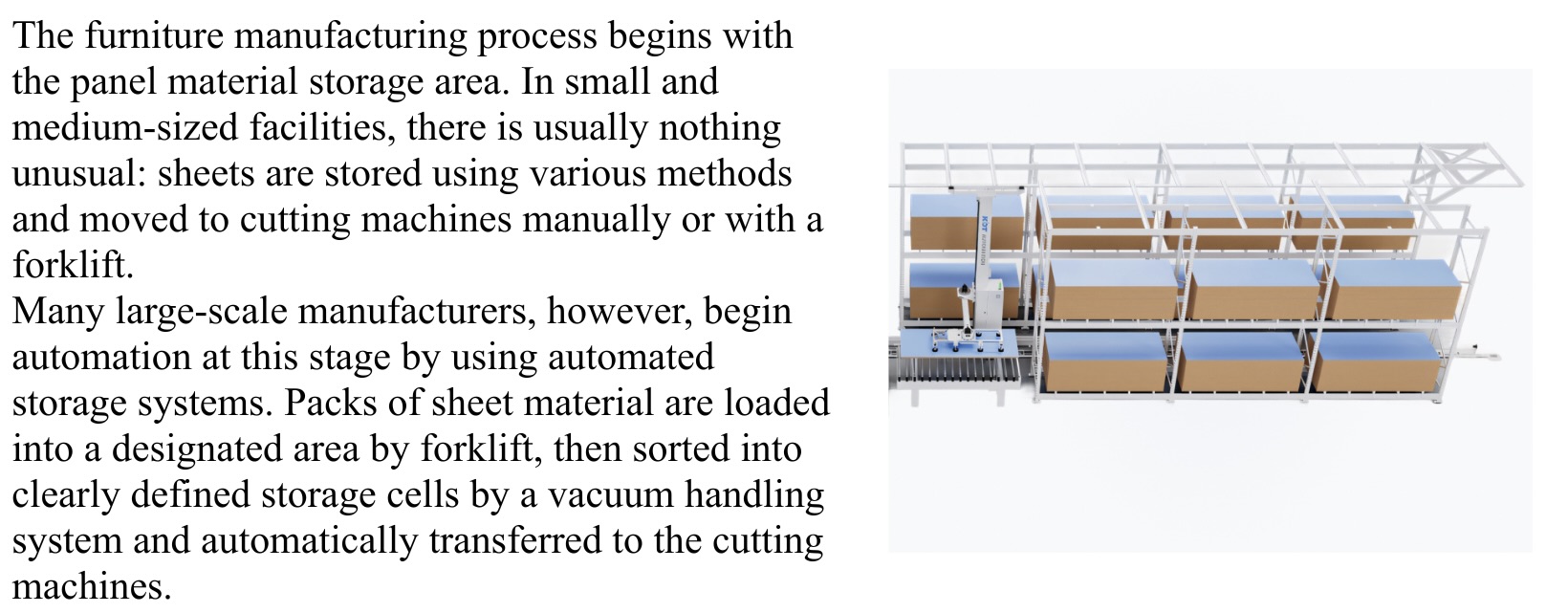
For a large-scale manufacturing facility, the question is not which cutting machine to choose, but how many to install. Based on our experience, most large manufacturers opt for a configuration of two to three panel saws and two to four CNC machining centres.
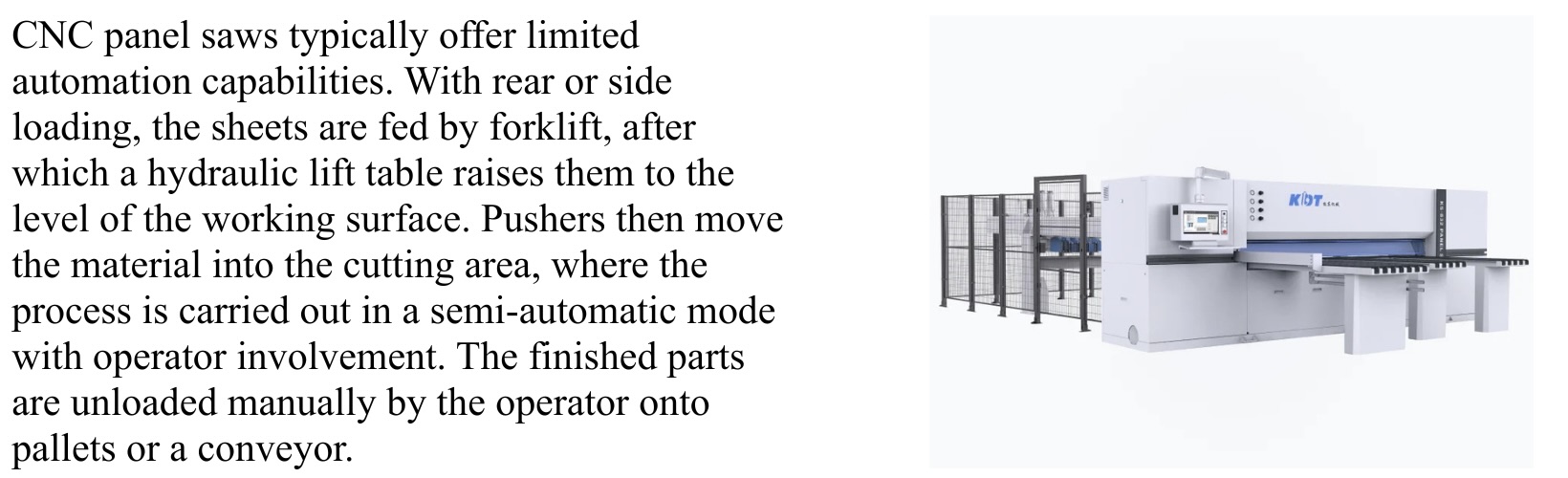
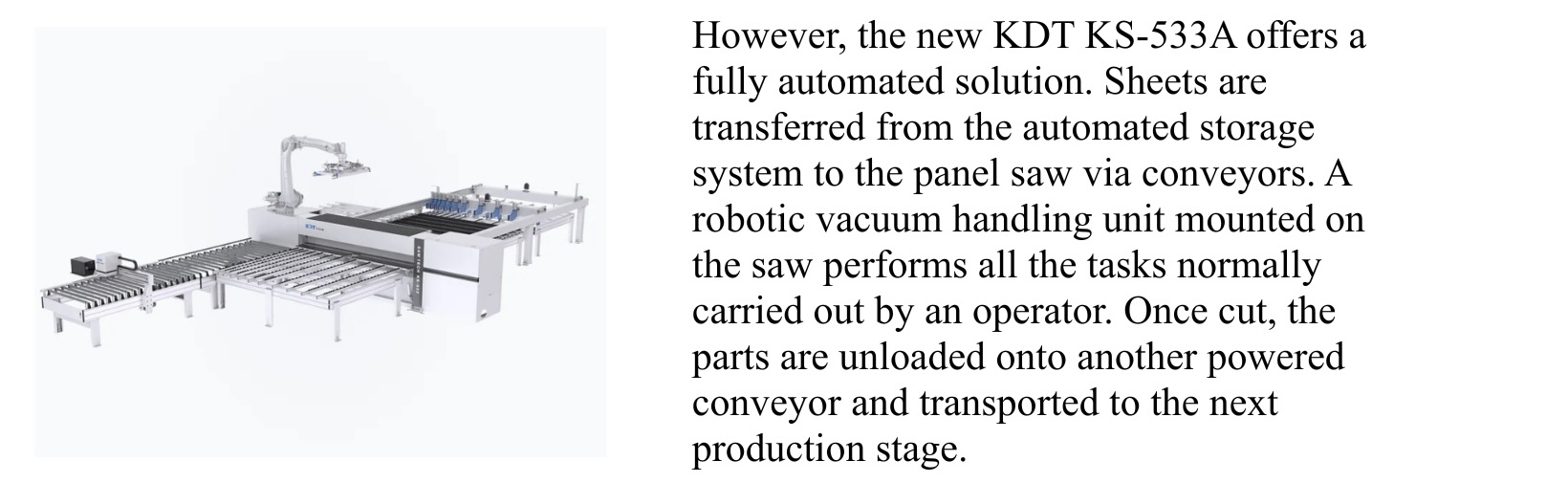
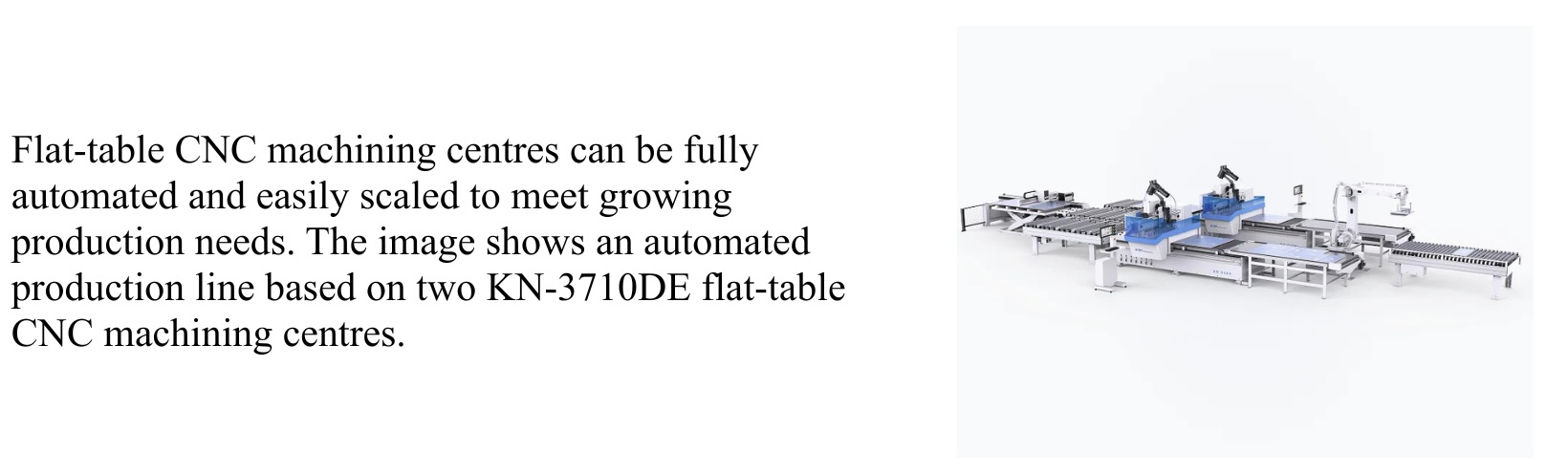
Sheets from the automated storage system are loaded onto the KHA-1710TS loading table. Using the automatic lifting function, the table raises them to the machine’s working height based on readings from an optical sensor. A label printer installed on the loading table applies information labels to the future part positions. These labels are then scanned to load the corresponding machining programs on various machines.
A beam equipped with vacuum modules transfers the labelled sheet from the loading table to the machining centre, where it is positioned by an alignment system. While one sheet is being processed, labels are already being applied to the next one.
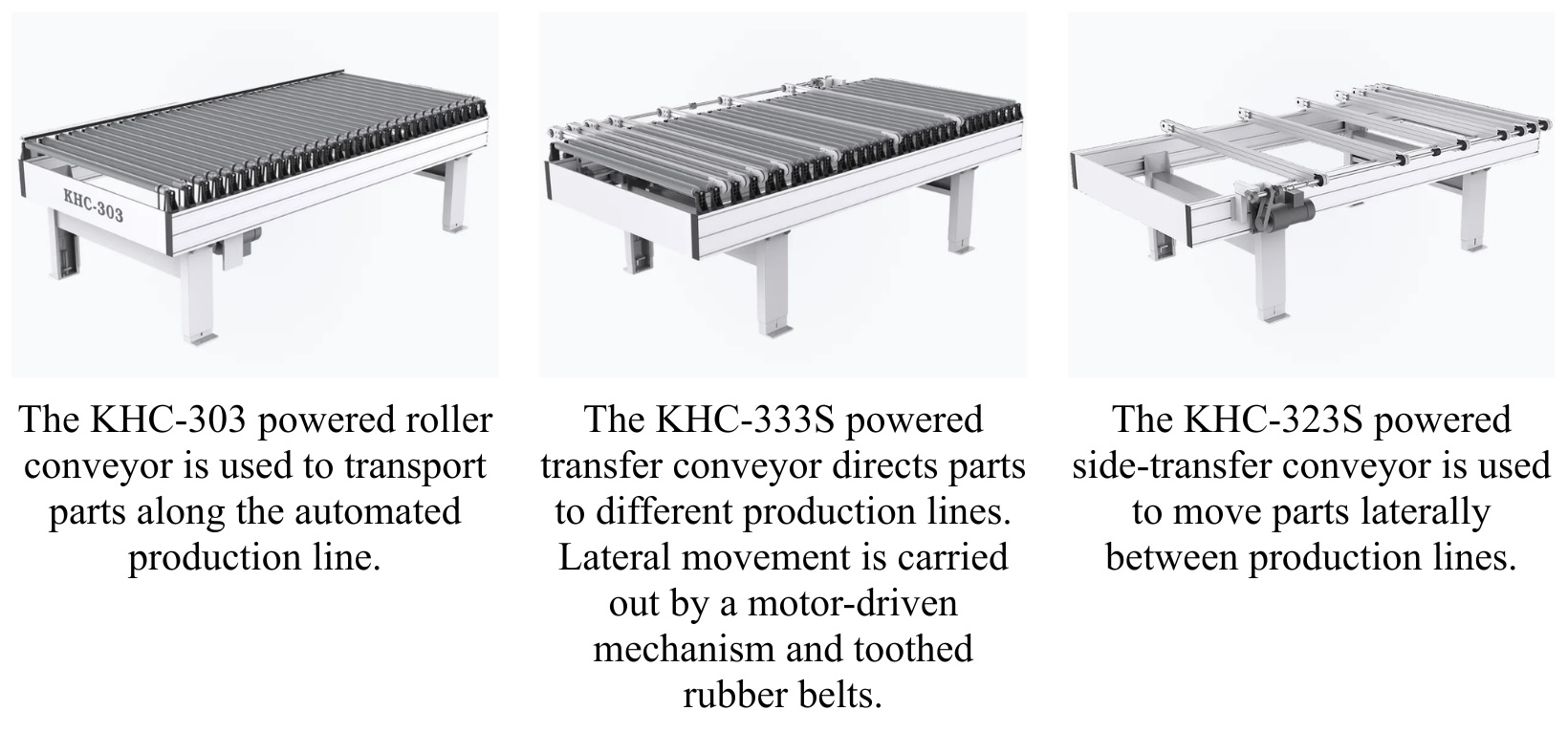
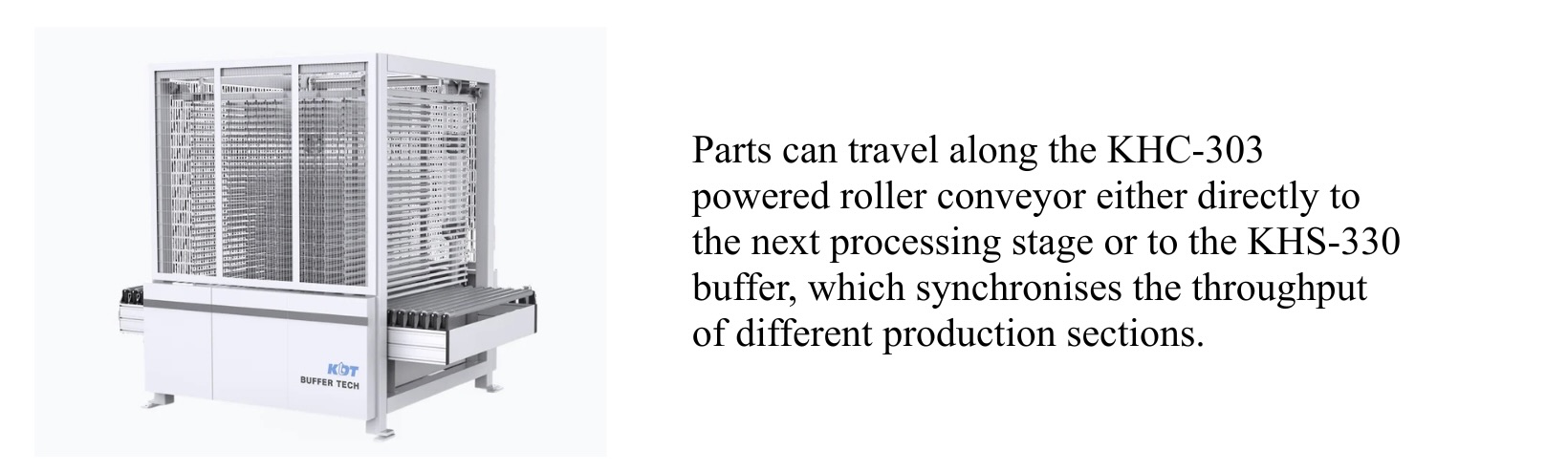
The finished parts are transferred from the machine to the KHA-9710 unloading table. From there, they can be unloaded manually or moved by a robotic vacuum handling unit onto the KHC-303 powered roller conveyor. During transfer to the unloading table, the work surface is automatically cleaned of sawdust.
In automated furniture manufacturing, the edge-banding section is typically equipped with a four-sided edge-banding line. The most common configurations include four edge-banding machines; one or two machines combined with a panel return system; or two double-sided edge-banding machines.
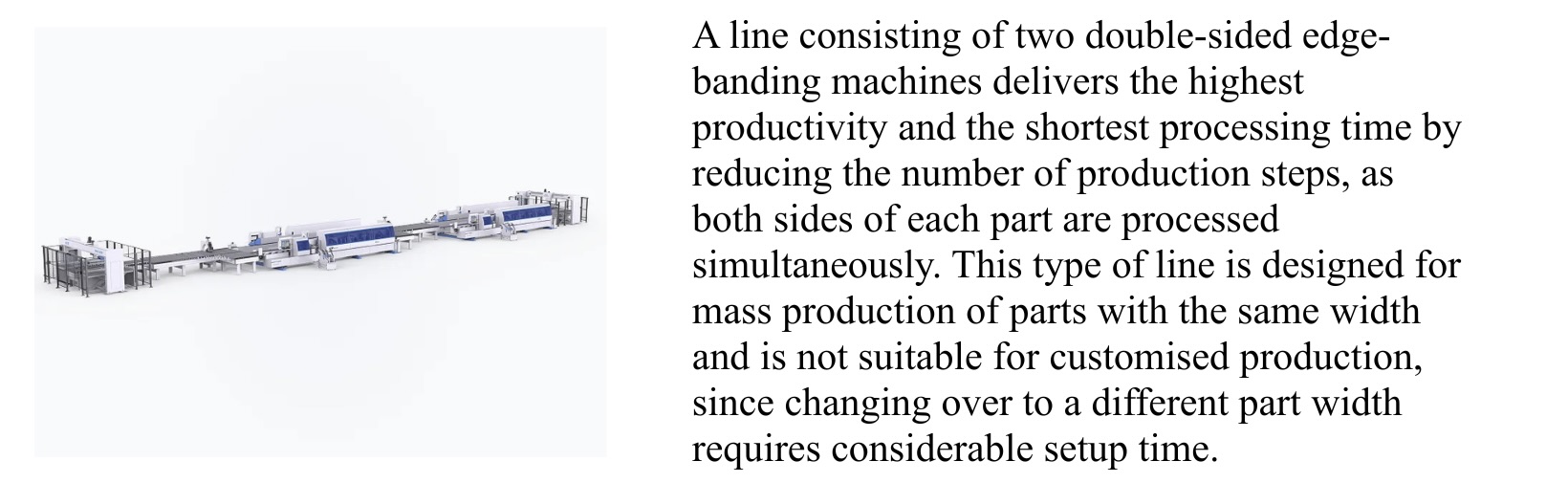
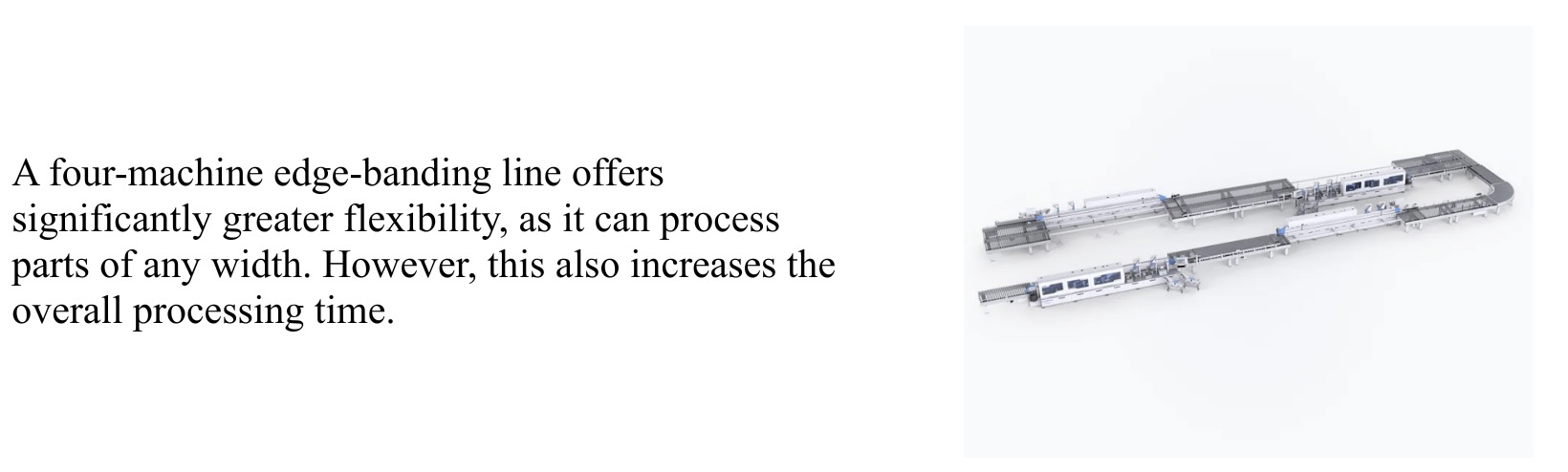
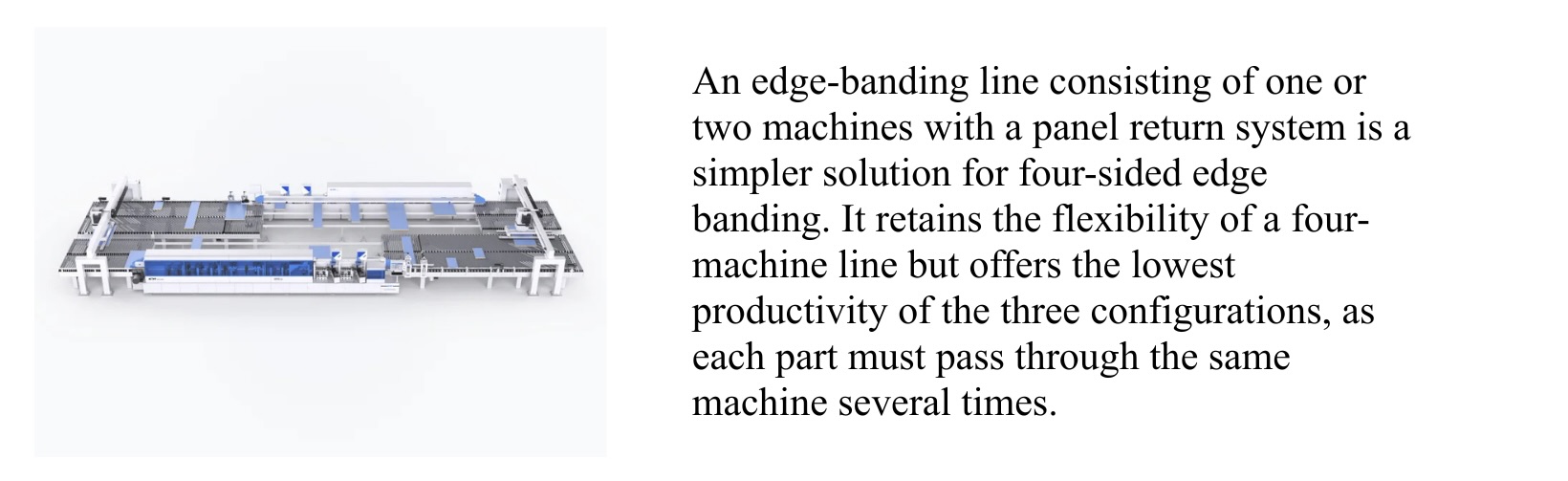
Three main types of drilling machines are used for integration into automated production lines: multi-beam drilling machines, CNC drilling machines, and CNC drilling machines with two worktables. They use information-label scanners to automatically configure the machine for the required machining programme. To achieve the right balance between productivity and production flexibility, all three types are widely used.
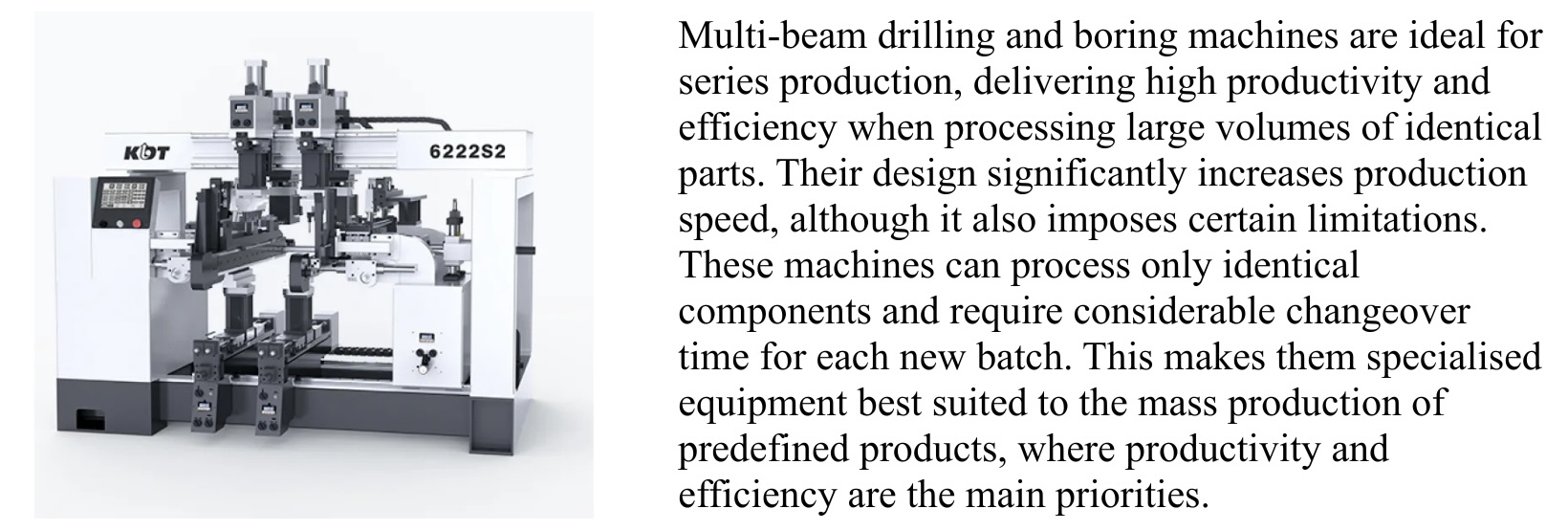
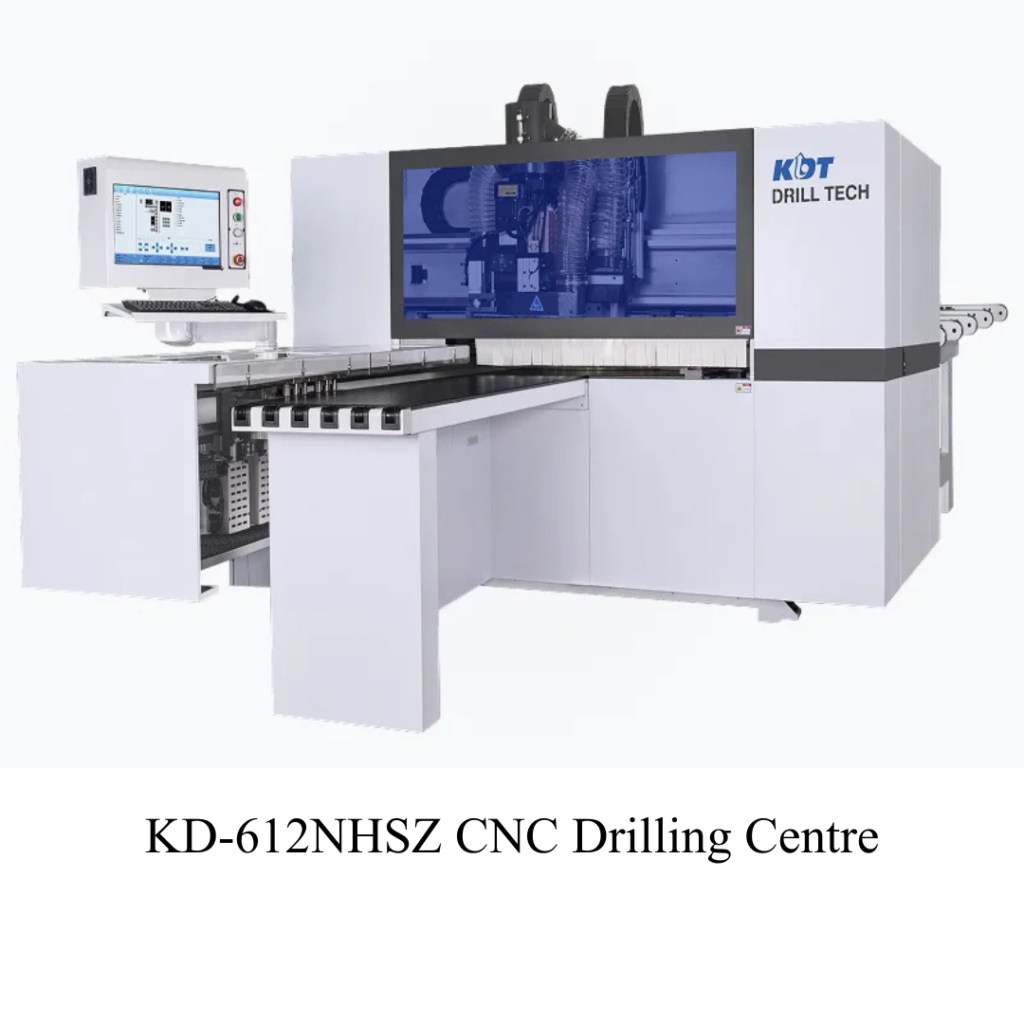
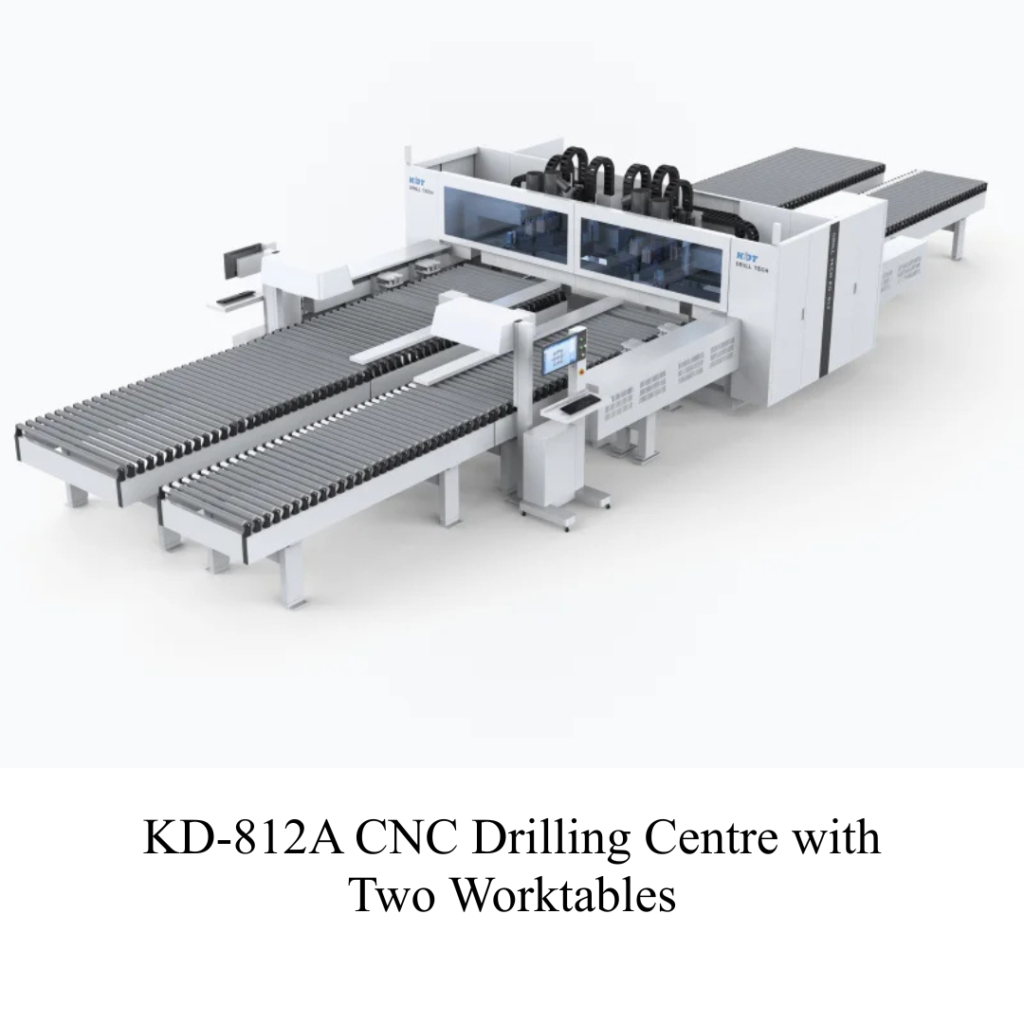
CNC drilling centres combine high productivity with maximum production flexibility. Unlike multi-beam drilling and boring machines, where machining is performed by stationary drilling units, every unit in a CNC drilling centre moves actively during operation. This enables them to handle both series production of identical parts and the machining of varied components with equal efficiency, without compromising speed or accuracy.
In addition to standard drilling operations, different CNC drilling centre configurations can be equipped with additional units, such as grooving saws or milling units with automatic tool changers. This significantly expands their functionality and allows complex part machining to be completed in a single pass, reducing the overall production cycle.
The KD-812A CNC drilling centre with two worktables, developed on the basis of the KD-612NHSZ model, effectively combines the capabilities of two machines within a single frame, significantly reducing the required production floor space.
CNC drilling centres are therefore the most popular choice for automated manufacturing facilities. Their moving units combine high productivity with flexibility, enabling efficient machining of both identical and varied parts without sacrificing speed or precision. Additional equipment, such as grooving saws and milling units, further expands their capabilities, allowing complex machining to be completed in a single pass and shortening the production cycle.
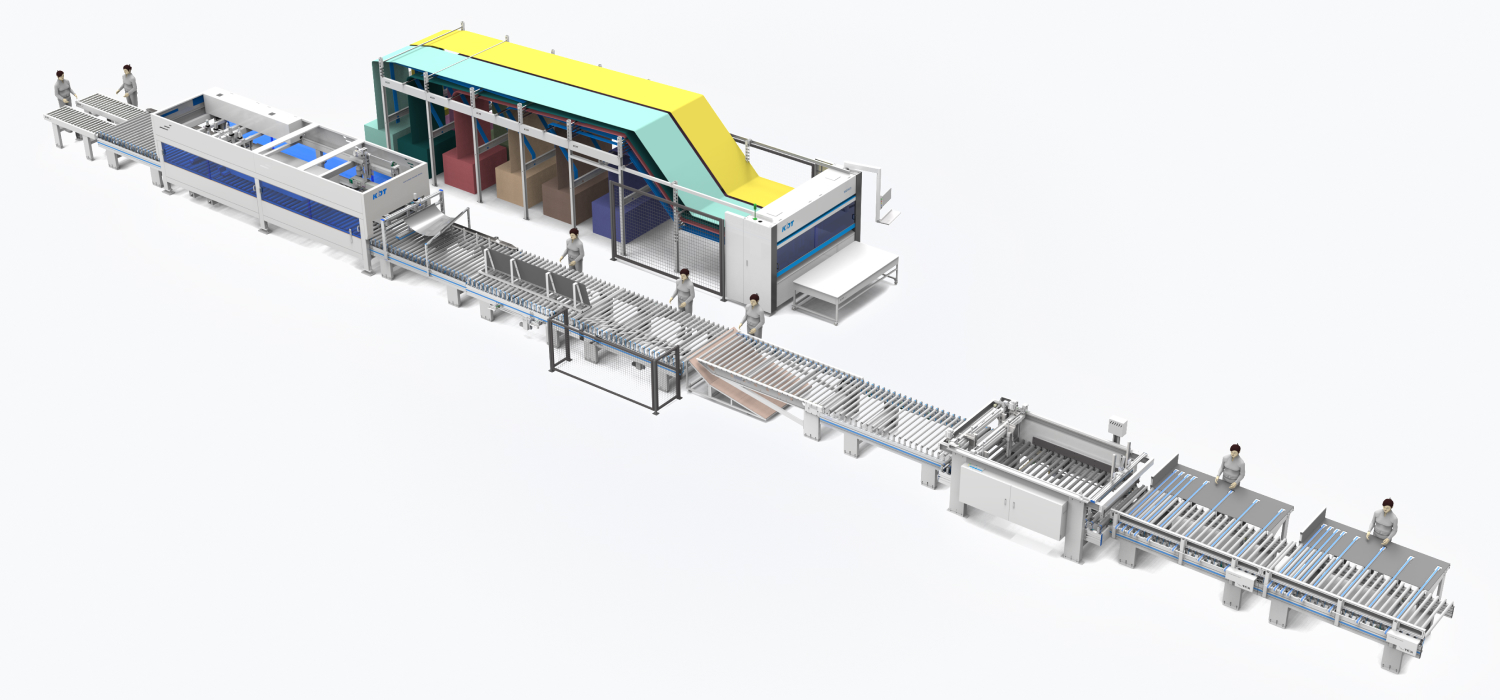
Example of an Automated Packaging Line
/
Medium-sized and large manufacturing facilities are increasingly using machines for producing and gluing boxes. When designing a large-scale facility, however, an automated packaging line can also be added and integrated directly into the automated production line.
The first advantage of this approach is the automatic sorting of parts by order within the sorting section, eliminating the risk of errors. Another advantage is the option to install an automatic measuring station, which transfers data on the dimensions of grouped parts directly to the box-making and gluing machines in automatic mode.
You can learn more about this solution in our article, “KDT Automated Line for Packaging Furniture Parts.”
/
Conclusion
Contact the specialists at Stancomplect. They will carefully assess your production requirements, help determine the optimal equipment configuration, and develop a production line layout free of charge in accordance with your technical requirements.
For a consultation, please contact:
+38 (050) 584-53-15
+38 (067) 005-86-87
Stancomplect also offers a 10% discount on drill bits for UAFM members:
.