

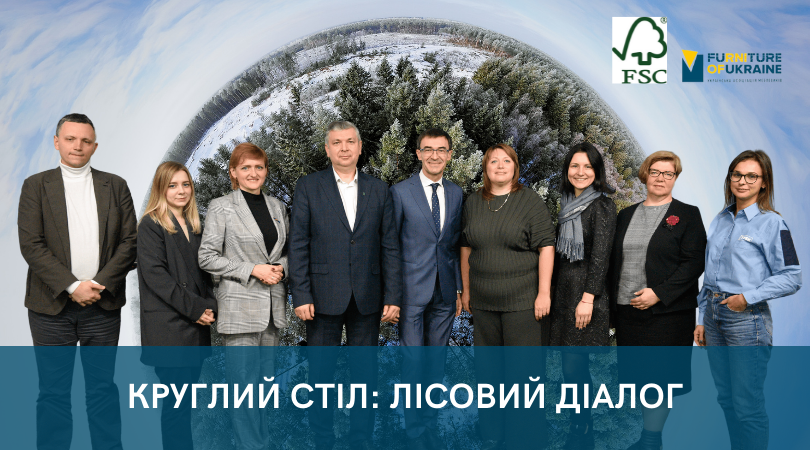
Green procurement — to develop the economy and preserve forests
Preventing global climate change, conserving natural resources and ecosystems while benefiting economically is possible through the green procurement mechanism. The existing legal basis for public procurement contributes to the achievement of strategic environmental and social goals, in particular, stopping and preventing deforestation. Requirements for the environmental characteristics of the subject of procurement and non-price evaluation criteria can now also influence the choice of the tender winner, as well as the price. But, unfortunately, their use in tenders is now an exception rather than a daily practice. That is why the Forest Stewardship Council (FSC®) in Ukraine initiated a discussion on the need to encourage procurement participants to choose products based on their environmental footprint (from production to disposal).
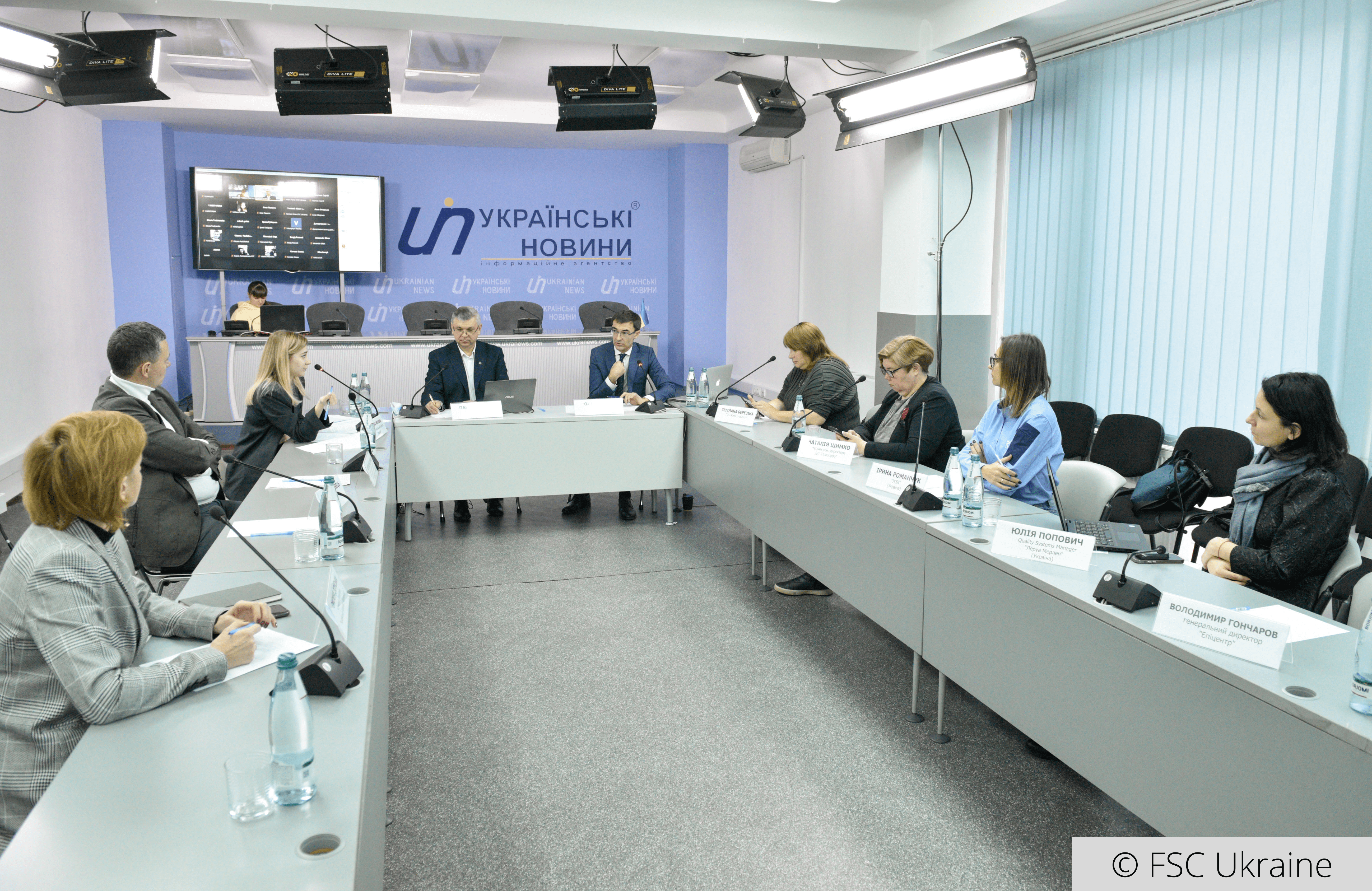
Kyiv — December 15 the Forest Stewardship Council (FSC) in Ukraine held the fourth “Forest Dialogue” — a round table about the development of both public and private green procurement in the domestic market. The multilateral dialogue also aimed to disseminate the procurement experience of responsible businesses and encourage bidders to select products made from renewable or recycled resources. All these steps will help Ukrainian forests to become more sustainable and productive, and Ukraine to achieve the goals of sustainable development.
The round table was attended by: Roman Filonenko, Deputy Director of the Department for Waste Management and Environmental Safety of the Ministry of Environmental Protection and Natural Resources; Natalia Shimko, Deputy Director General of Prozorro; Ekaterina Minova, Representative of the Antimonopoly Committee of Ukraine; Iryna Romanchuk, Purchasing Manager of the JYSK UKRAINE LLC; Yulia Popovich, Quality systems manager of Leroy Merlin UKRAINE LLC; Oksana Donskaya, member of the board of the Ukrainian Association of Furniture Manufacturers and others.
 “Green public and private procurement is an effective way to balance reliability, quality, price and the environment. These are tender offers that require non-price criteria and the value of the life cycle of products or services. This means that the advantage is cheaper products that do not cause harm to the environment. For example, the requirements for furniture for the New Ukrainian School are confirmation of sustainable origin of wood, recyclability, manufacturer-guaranteed service life, ability to upgrade furniture, ergonomics, improved environmental and radiation safety according to environmental labeling standards,” — said Svetlana Berzina, President of the SBI “Living Planet. — “By using non-price criteria that cover all stages of the product life cycle, we can achieve not only short-term economic benefits (more reliable products with extended service life), but also long-term ones, supporting local business and human health while preserving ecosystems.”
 “Today, the drivers of green procurement development should be driven primarily by agents of change in the state. We need ambassadors to promote green policies at various levels of government, whose role will not be limited to the development of legislative initiatives. It is important that when purchasing products, from the President’s Office to the United Territorial Society, environmental characteristics and non-price criteria for determining the winners take the lead in the tender procedures. This will form a culture of responsible consumption and will set the vector of sustainable development of society in our country”, — said the director of FSC Ukraine Pavlo Kravets.
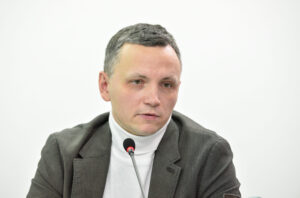 “From our experience of tender procurement of services, the lowest price offer is not always the cheapest option in the end. Therefore, we show by our own example the success of procurement with the application of environmental performance requirements,” — said Roman Filonenko, Deputy Director of the Department of Waste Management and Environmental Safety of the Ministry of Environmental Protection and Natural Resources of Ukraine. In his opinion, now, it is not necessary to make compliance with environmental criteria mandatory. It is sufficient to have high-quality methodological recommendations for tenderers on the use of environmental requirements for goods or services and non-price criteria. Those companies that want to win the offer will see for themselves the need to comply with the standards of a certification scheme.
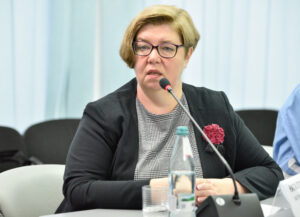 Natalia Shimko, Deputy General Director of “Prozorro”, noted that tenderers are cautious about the environmental criteria application, as regulators focus on combating price increases, so they are suspicious of customers who chose not the cheapest bid, education on the topic of green procurement is needed among the employees of the control system, and then customers will buy more sustainable products without reservations. Prozorro plans to introduce electronic tender documentation, which will provide an open electronic field for entering environmental characteristics into the subject of procurement. This will provide the possibility of electronic monitoring, i.e. find out whether the customer applies the requirements for environmental performance and what exactly. Today, such an analysis of green procurement is possible only manually.
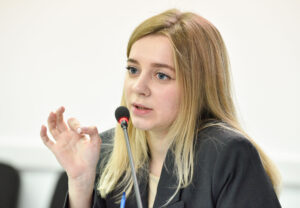 The representative of the Antimonopoly Committee of Ukraine Ekaterina Minova spoke about the active and systematic work of the body on applications for green procurement of bidders. Each case is considered in accordance with the Law on Public Procurement, which regulates the use of such criteria.
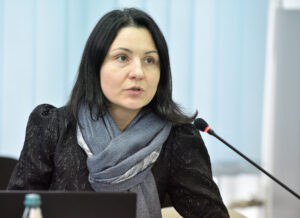
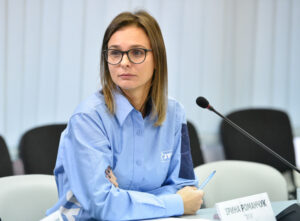 Today, the transition to a more sustainable model of work is extremely important for retail. In the coming years, JYSK and Leroy Merlin plan to switch to the sale of furniture and packaging that are certified according to internationally recognized certification schemes, said Yulia Popovich and Irina Romanchuk. Because of thess changes, businesses are trying to reduce their impact on the environment and contribute to greater sustainability of forest ecosystems.
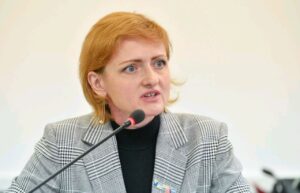 “Exports of furniture products this year amounted to more than 1 billion dollars, which is 43% more than last year. And 88% of the total volume was products in respect of which the legality and permanence of origin were confirmed in accordance with the requirements of the European market, “— said a member of the Ukrainian Association of Furniture Manufacturers Oksana Donskaya. She noted that furniture exporters are the flagships of development and of the domestic market. After all, they supply products to large domestic retail chains that already typically meet environmental criteria. A good stimulus for the development of eco-consciousness for small and micro-producers is the association in furniture clusters and cooperation with market operators. After all, retailers require suppliers to have certificates of origin and eco-labeling.
The participants of the round table agreed that the push for the development of the green procurement system in the country should be:
- raising awareness among the masses on green procurement;
- changing consumer preferences by increasing confidence in the compliance of products with environmental criteria and characteristics;
- development and improvement of tools for the implementation of environmental policy in terms of green procurement and its implementation in the system of government and business decisions;
- increasing control over the integrity of labels and declarations of products presented on the market.
About FSC
Forest Stewardship Council® (FSC®) is an international non-governmental organization whose activities are aimed at supporting environmentally and socially responsible forest management and ensuring the sustainable use of forest resources. That is, the FSC mark on wood or on a product made from it is an indicator that the products are made of wood from well-managed forests. Today, the FSC is represented in 82 countries. The total area of FSC certified forests is 230.1 million hectares. The development of FSC certification in Ukraine has lasted for more than 20 years. As of December 2021, 3.8 million hectares of forests in Ukraine have been certified and 121 forestry system certificates have been issued. The timber business is covered by 410 supply chain certificates.
