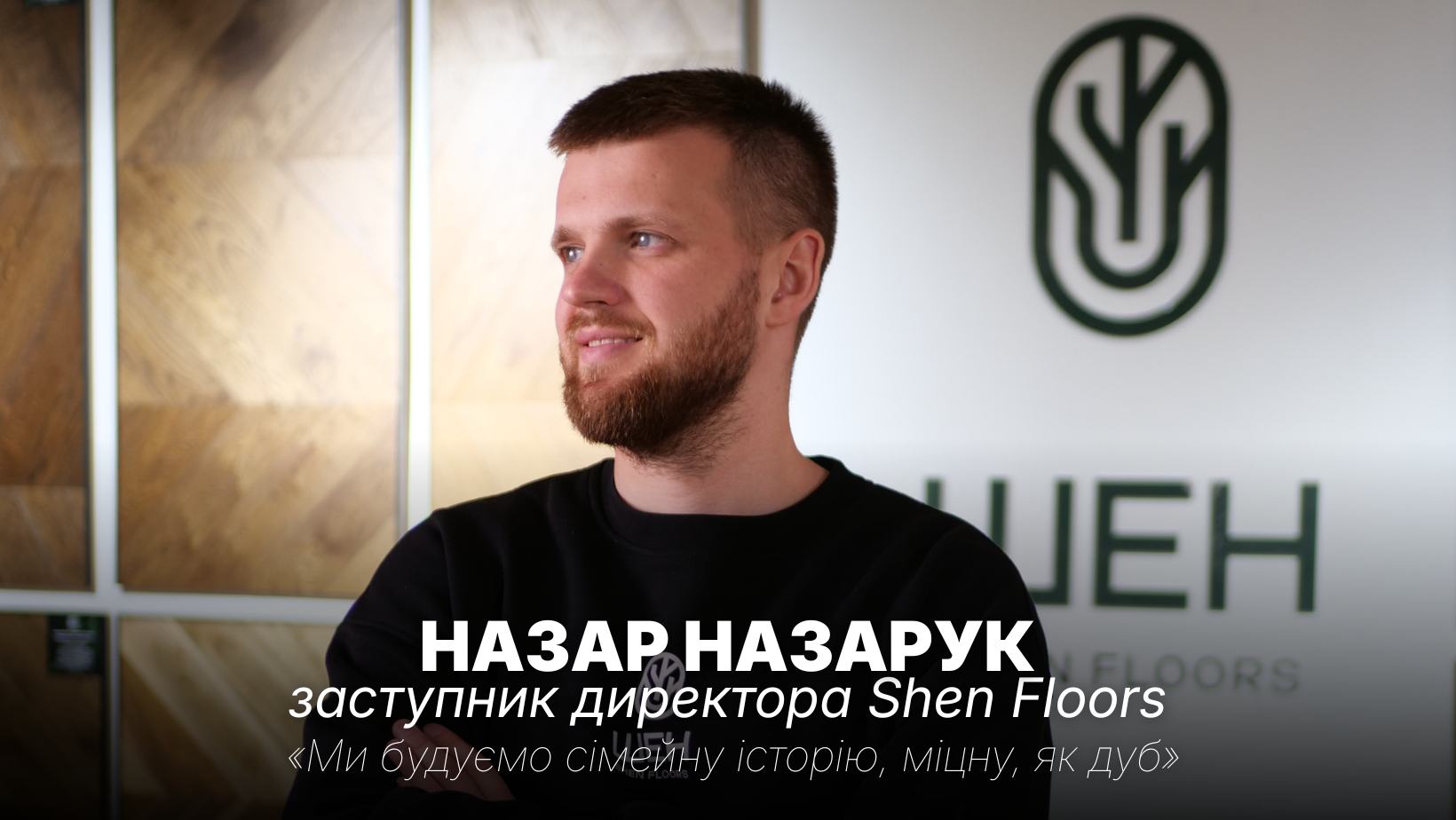
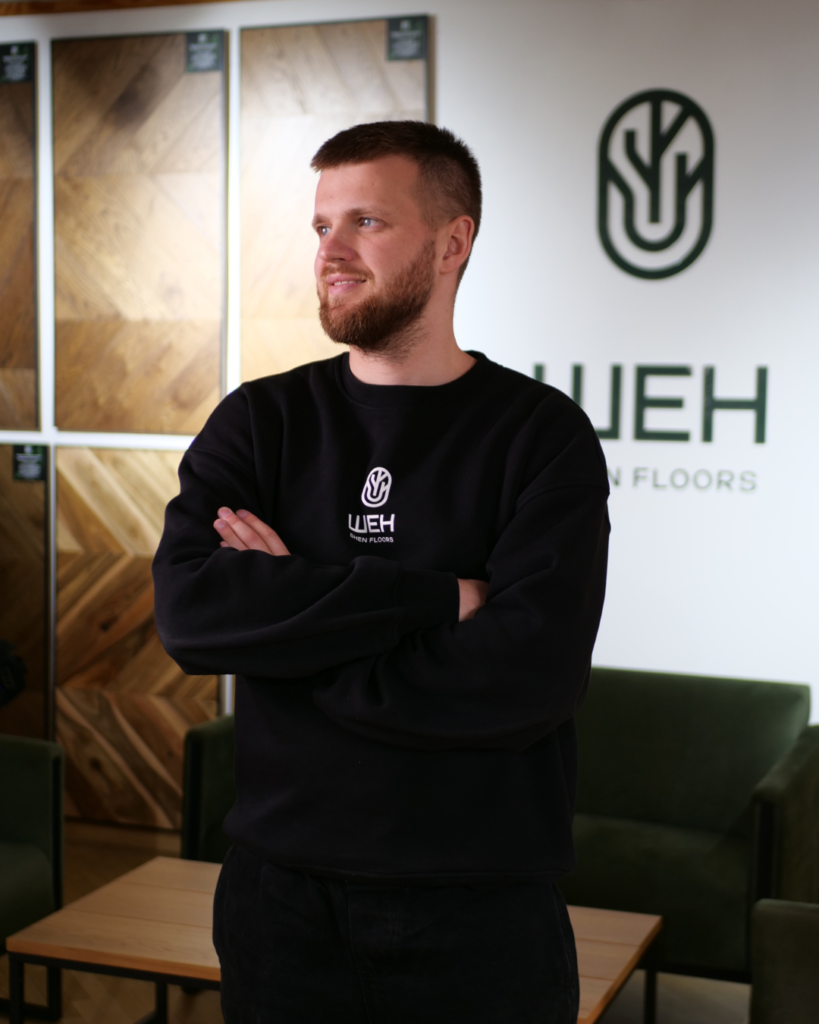
Interview with Nazar Nazaruk, deputy director of Shen Floors
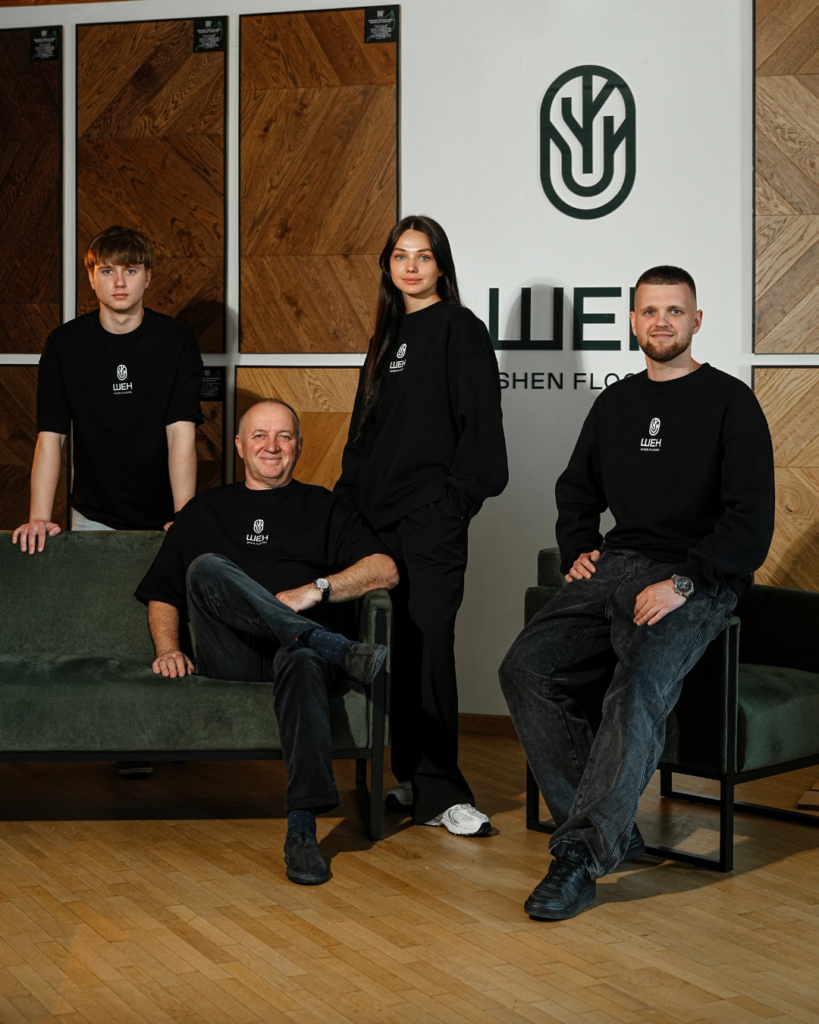
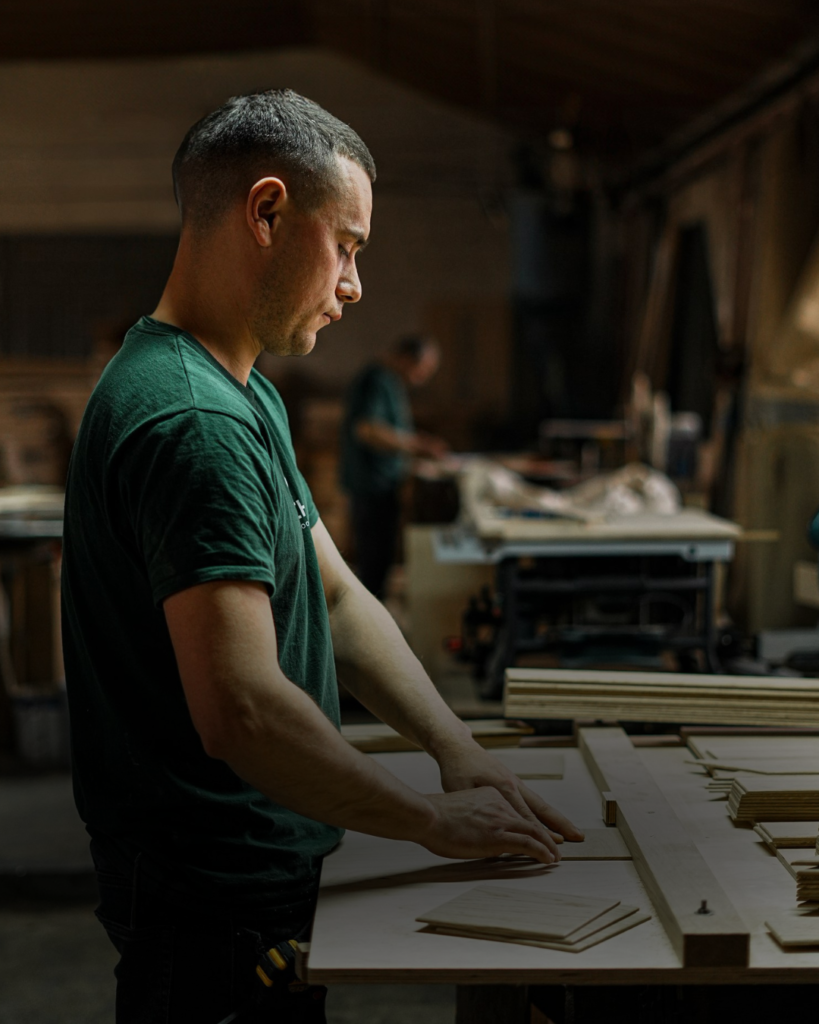
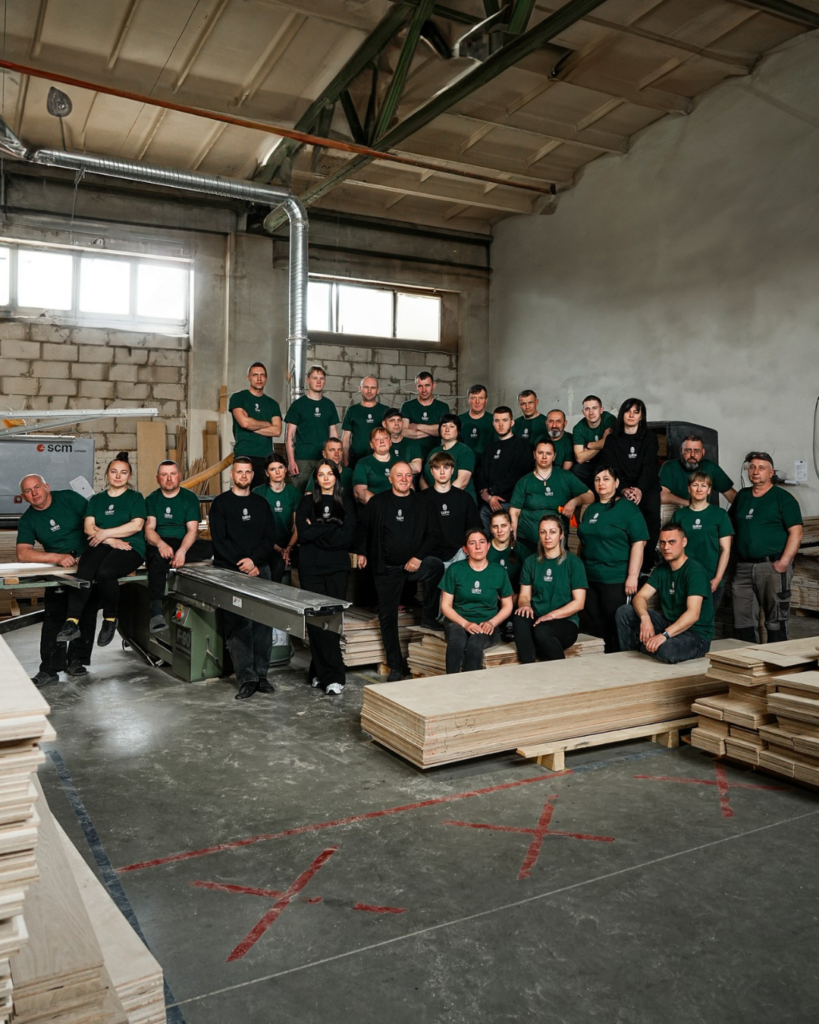
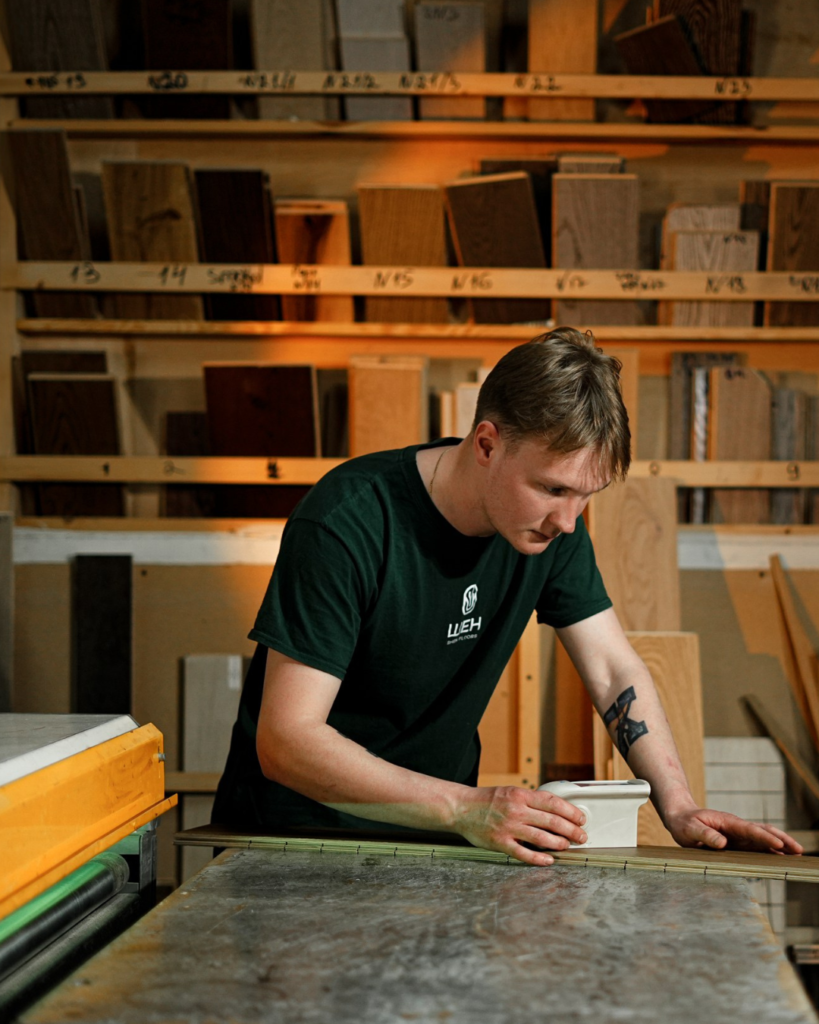
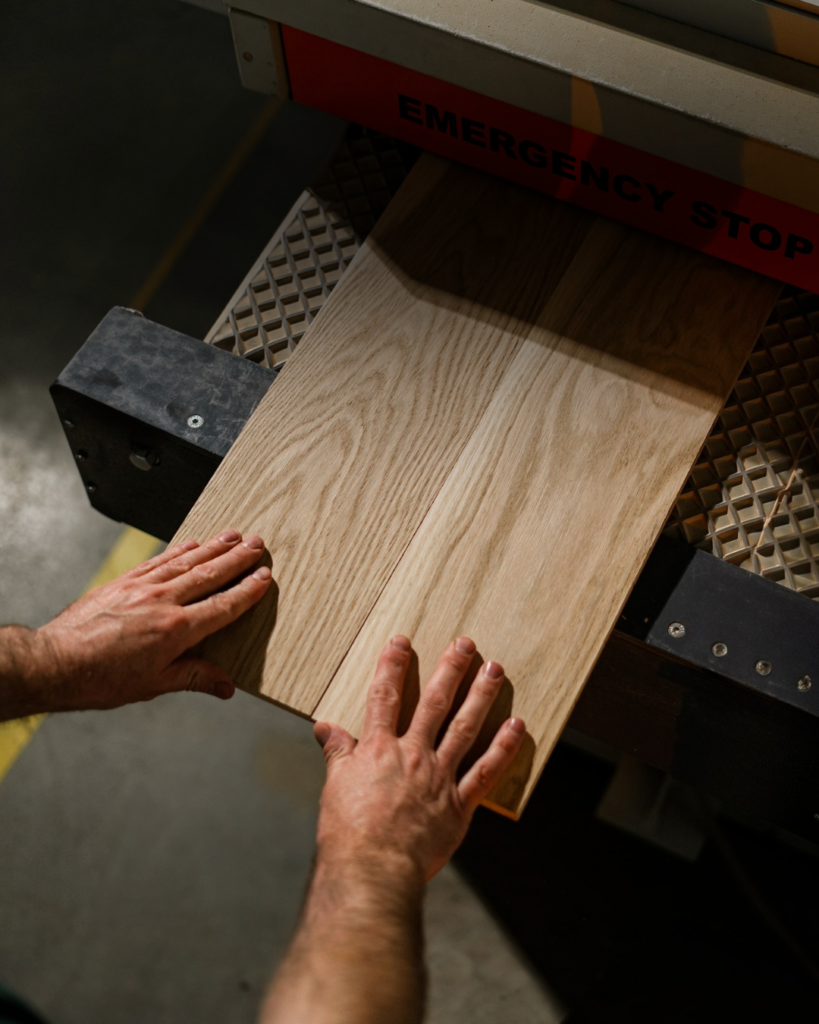
Shen Floors is a family woodworking company from Kivertsi in Volyn, producing parquet, engineered and solid hardwood flooring for over 25 years. Today the company has 12 showrooms across Ukraine and exports to 10 countries worldwide. Nazar Nazaruk is the deputy director who joined the family business to develop it alongside his father, and over several years rebuilt it from within: introduced Lean approaches, doubled the domestic market share, and is actively building the brand in Ukraine and abroad.
/


/
Morning or evening?
Morning is productive, evening is for family.
/
Planning or improvisation?
I live by a plan, though in today’s reality it needs regular revision: you can set a direction for a year, but priorities — monthly.
/
Are you more of an entrepreneur or a systems architect?
Probably more of a systems architect. An entrepreneur is more about short-term actions and specific decisions. But the world is changing too fast right now, so you have to combine both approaches, especially in Ukraine.
/
You live by the “12 Week Year” principle. Is that about discipline or about wanting to accomplish more?
It’s about wanting to accomplish more — after 40, I’d like to be resting rather than working. There’s a general statistic that people get the most done in the last quarter of the year. So why not make every quarter the “last one”? When you limit yourself in time and map out what you need to do each day and week, your effectiveness multiplies. The foundation for me was “Atomic Habits” — only after reading it can you move on to any other kind of planning.
/
Is constant optimization a conscious choice or already a way of thinking?
It’s already a way of thinking. If I’m not thinking about something and not optimizing anything, I feel uncomfortable. I think this is common to every entrepreneur who is growing and achieving results.
/
You have a lot of activity — sports, travel, movement. Is that energy recovery or inspiration?
They’re interdependent: first recovery, then inspiration, not the other way around. When I’m doing active sports and my head is full of adrenaline, I don’t think about work at all — I rest 100%. But lying on the beach, I still think about business. Travel is both rest and a source of ideas: you see how people live in other countries, meet new people, sometimes combine it with business meetings.
/
What’s the focus in your learning right now?
Right now I’m deep into OKR — reading a book and realizing I’ve already been doing a lot of this, but only superficially. The key idea: goals should be visible to all departments together, not each one separately.
/
Was there a moment when learning changed a business decision?
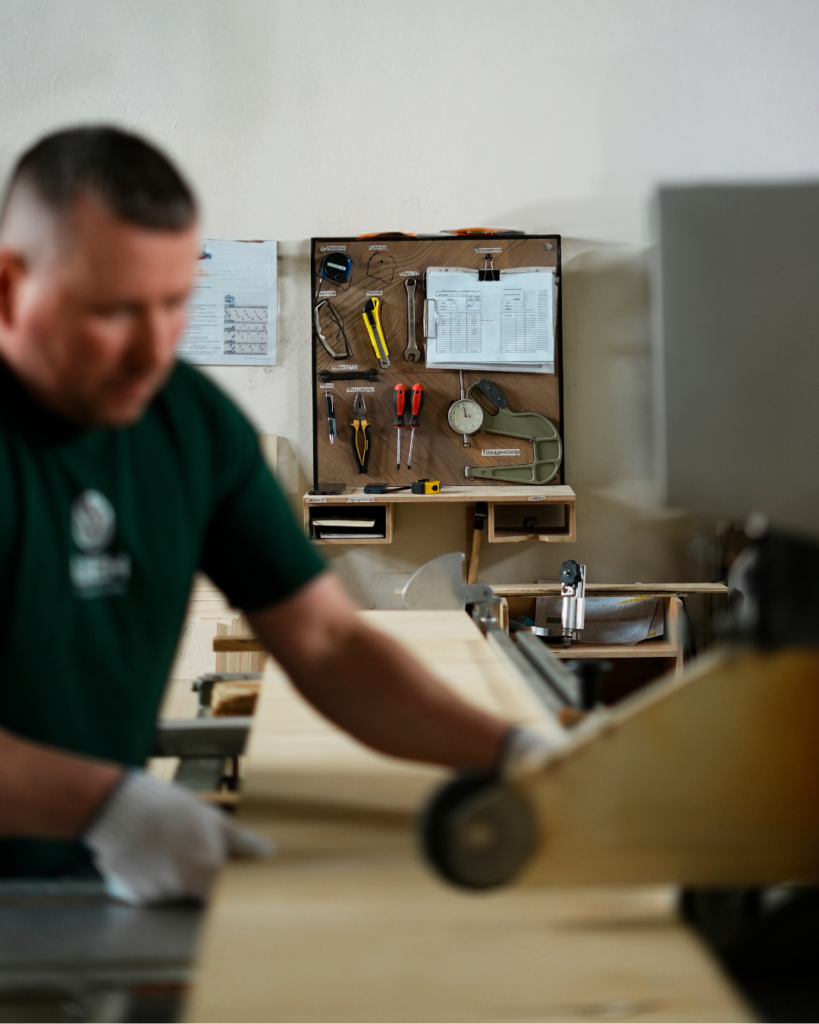
Yes, the turning point was my first Lean course. Before that I had read “The Toyota Way: 14 Management Principles” and even labeled the shelves in the workshop myself — what goes where. I’d come back a week later and see nothing had changed, because only I was involved, not the whole team. So I went back to training, this time with key employees. After that, every workshop manager trained their own subordinates separately, we went through the eight types of waste — and everything started working. I’m satisfied with the results today.
/
At what point did you feel that Shen Floors was already a system, not just a business?
When we crossed 30 completed projects per month. Once the dream was one project a day — today it’s 80+ per month. Paradoxically, this breakthrough happened right after the full-scale invasion, when my father went to the front as a volunteer. From that moment, the responsibility for preserving and developing the business fell to me. I made a bet on the Ukrainian market, and that strategy paid off: the historical model where exports accounted for 90% was completely transformed. Now 70% of our product is sold in Ukraine, and only 30% goes to export.
/
How did the network of showrooms develop — was it planned growth or a reaction to the market?
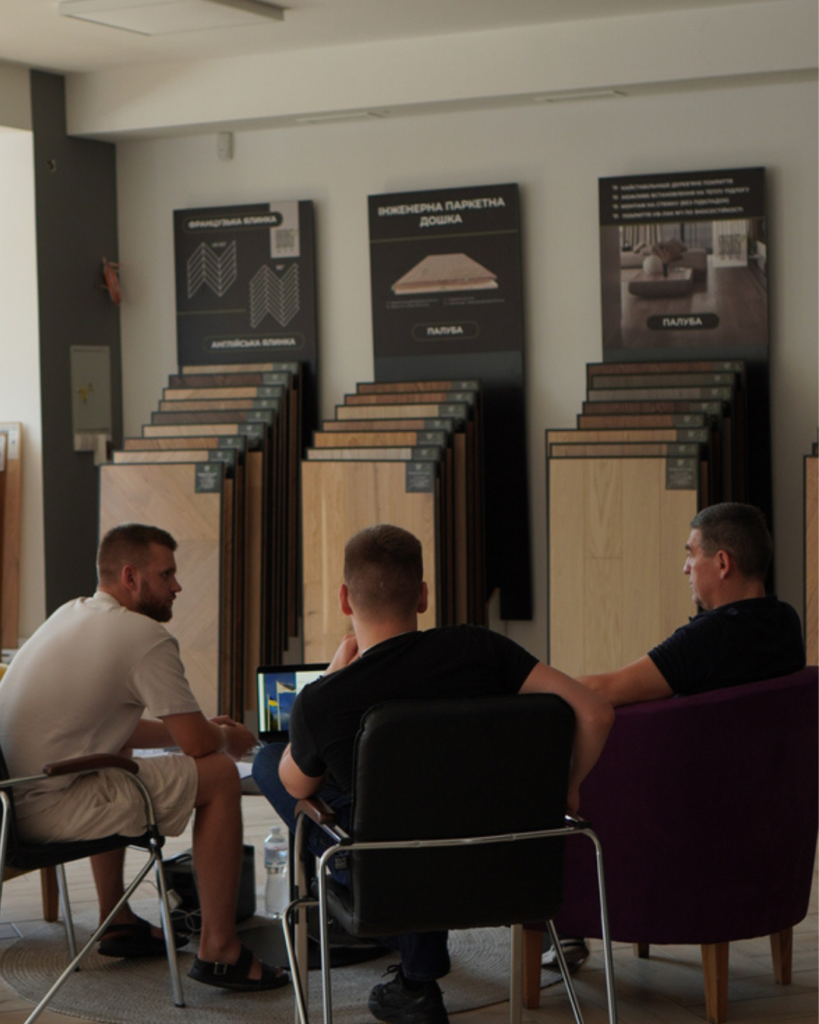
Both at the same time. We responded to client needs: if I saw a lot of inquiries from a particular city, I’d look for a partner there. People find it more convenient to pay a real person, see the product in person, and get service on-site. Today we have 12 showrooms in Ukraine, of which five or six are mono-brand Shen Floors stores; we’ve also successfully built a partner network abroad and established regular exports to 10 countries.
/
Which export countries account for the largest share?
Our biggest partner is Azerbaijan — Baku. We’ve been working with them for over 10–15 years, and there’s an interesting feature: trends appear there 3–5 years later than in Europe. That gives us the opportunity to stay ahead. We also actively ship to the Netherlands and are entering the UK market. The next focus is France: we’re planning to run targeted advertising, find a local representative, and possibly open showrooms.
/
What’s harder — creating a product or maintaining its quality while scaling?
Maintaining quality at scale — without question. Creating a product is mainly a financial matter: you buy equipment, copy a sample. But preserving reputation while growing — that’s about the human factor, configured business processes, and constant oversight. There are far more variables involved.
/
You took on complex designs that others turned down. Why?
It’s our ideology — satisfy the client and do something non-standard. If we only did standard options, how would we differ from the giant manufacturers? Plus the margins on such orders are good. And the logic is simple: if we do something incredibly complex for a client that no one else could — they’ll come back to us for standard items too.
/
How important is it to you who you work with as suppliers?
Suppliers are 50% of success. If a supplier lets us down — we let the client down. Finding quality suppliers who share your values and product standards takes time and experience. For us that question is now settled, and when new offers come in — we don’t even consider them, regardless of price.
/
There was a case where you chose Kleiberit as a supplier not because of price, but on a recommendation. How did that happen?
Before that we had worked with Kiilto for years — no questions about quality. Valentyn Podgornov from Kleiberit had been trying to get through to us for a long time, but he found the right approach: he didn’t just offer us glue, he addressed a different need we had. We already had glue; he found something else he could help with. When someone offers not just a product but a path to faster growth — the value proposition becomes something else entirely.
/
Who is your client today?
The primary client is an entrepreneur or someone in a senior position who has no time to deal with renovation. They want to pay and receive a turnkey service: selection, delivery, unloading, installation. Secondary clients are designers and architects.
/
Do you see a difference between Ukrainian and foreign clients?
Ukrainian clients are far more demanding. I remember one case: I arrive at a project, the client picks up a fork, drops it on the floor, gets on his knees, shines a flashlight — look, a tiny dent. That’s never happened with foreign clients. But from experience I’ve learned: these nuances need to be discussed upfront and written into the contract. After that incident, we did exactly that.
/
What was the hardest thing about international projects?
Meeting deadlines. Power outages, mobilization — all of that is reality, but you can’t write about it to a foreign client, because they’ll start questioning whether it’s worth working with you at all. So we always try not to dwell on it and meet deadlines regardless.
/
Do you tend to control or delegate?
Right now, more delegate. I even get satisfaction from seeing a process happen without my involvement — that’s the best thing there is. There are three stages: first the team can’t function without you for a single day, then they can manage every day on their own, and the best scenario is when they can work without you and are still developing.
/
What was the hardest moment in business?
COVID and the start of the full-scale war. The start of the war — because I had no idea what to do or where to go. COVID — because it was a powerful blow to offline businesses: people weren’t going anywhere, and flooring was the last thing on anyone’s mind. Honestly, I still don’t know what to do in times like that. Probably keep a financial cushion and ride it out.
/
Is there a decision you wouldn’t repeat?
If a supplier has let you down — don’t go back to them. A telling case: before the war, everyone sourced plywood from Belarus — the best price and quality. When the war started, we switched to Ukrainian. The result — losses of over 200,000 due to plywood delamination on projects. We redid everything to protect our reputation. From that point on, Ukrainian plywood became off-limits for us — and we introduced several stages of testing for every batch of plywood to prevent repeat claims.
/
How has your attitude toward money changed?
Money is a tool for a comfortable life, nothing more. First comes the work and the product; money is the reward, not the other way around. Right now I even keep my own dividends lower in good months — all focus goes to developing the business. The more you invest now, the more you get later.
/
You’re building a brand aimed at reaching premium level in Europe. Is that a business strategy or a mission?
Competing purely on product inevitably leads to price-cutting and low margins, because it only attracts those looking for the cheapest option. We’ve set ourselves a far more ambitious goal: to elevate the perception of our product to the level of Italian luxury. When a client sees the label “italiano,” they instantly understand it means premium quality, no further explanation needed. That’s why our mission is to break stereotypes and make the label “Made in Ukraine” carry the same unquestioned trust and association with world-class premium.
/
What does success mean to you today?
Success is when plans come true and there’s a measurable result. I believe every person should map out their life at least to age 40–50: what things cost and how to get there. If it all comes together — that’s success. What’s also important is balance: the personal, the family, and work as three equal dimensions.
/
What story are you building through your business?
We’re creating a family story — as strong and lasting as the oak at the heart of the SHEN philosophy. For us, reputation and quality aren’t just words; they represent a deeply individual approach to every order. We don’t work for volume — our goal is to bring every project to perfection, taking into account the smallest client wishes. As for where you’ll see the Shen Floors brand in 10 years… I’ll say this: we have very ambitious goals and are preparing several major moves on the international stage.