

UAFM in faces: How the “Avant” company (TM “Modern”) manages to avoid the current shortage of qualified employees, in the story of its top manager Tetyana Salii.
The company “Avant” (TM furniture factory “Modern”), which is engaged in trade and export operations, is based in Bila Tserkva, but their products in a wide assortment can be purchased practically in all regions of the country not occupied by the enemy and not close to the front lines. The rich assortment is ensured by the versatility of the manufacturer, who equally skillfully produces both case and upholstered furniture. And mattresses. For greater convenience of their sales – both for buyers and for the manufacturer – a same-named online store has been created.
Our conversation about the company’s work in wartime with its representative Tetyana Saliy, who heads the sales and marketing department, began with the topic of labor shortages. It would seem, why be surprised here: nowadays this problem is the main headache for almost all Ukrainian employers? When it comes to an increasingly palpable shortage, it is mainly about the male workforce, which is threateningly “melting away” in industry due to the outflow of civilians into military defense units. But the company needs not only male workers, but also female workers. And here is the explanation we heard from Ms. Tetyana:
– Seamstresses began to be lured away from us by the light industry. The need for military clothing has increased, and thanks to this, sewing enterprises have been able to increase their sewing volumes. And for this, additional workers are needed. It cannot be claimed that “light industry” pays seamstresses more than furniture makers. What attracts women is different: there, the work is mainly with light fabrics, while with our upholstery textile it is harder to work.
– And yet the company manages not to bring the shortage of workers to a critical level?
– Yes. With great effort. Mainly by offering higher salaries. In addition, we are improving working conditions in the sewing shop – for both the winter and summer periods. We may even offer free lunches if the crisis escalates.
It’s a double-edged sword, as they say. Financing such improvements affects the cost of production, which increases in price, and hence its competitiveness, so it is understandable how difficult it is for owners to find the optimal balance in these matters. Technological and organizational optimization of production helps. For example, we try to produce products in larger batches. The acquisition of high-tech, highly functional equipment makes it possible to perform a number of operations involving fewer people. And we do not neglect the trend that is now gaining popularity in the domestic industry: offering some types of traditionally male jobs to women. Speaking specifically about our factory, not so much in the production of case furniture, but more in upholstered furniture and mattresses.
– In the third year of the war, when we – people psychologically, and industries organizationally have already, one might say, become accustomed to the war, has the factory managed to reach pre-war production and sales volumes?
– It is impossible to state unequivocally, because the periods and months are not alike. For example, last autumn-winter almost brought us to the level of pre-war indicators, but the end of this spring again moved us away.
Market demand is very sensitive to the situation on the fronts. Talks began about a possible enemy offensive – market activity in the country began to decline, the Russians went on the offensive – market caution intensified. We hope, relying on our army, that this deferred demand, if not in summer, then in autumn, will pass.
– Furniture makers began actively using an effective panacea for this from the first weeks of the war: increasing exports, for those who already had them, and starting them, for those who did not. Perhaps you too, especially since you have a separate company for this?
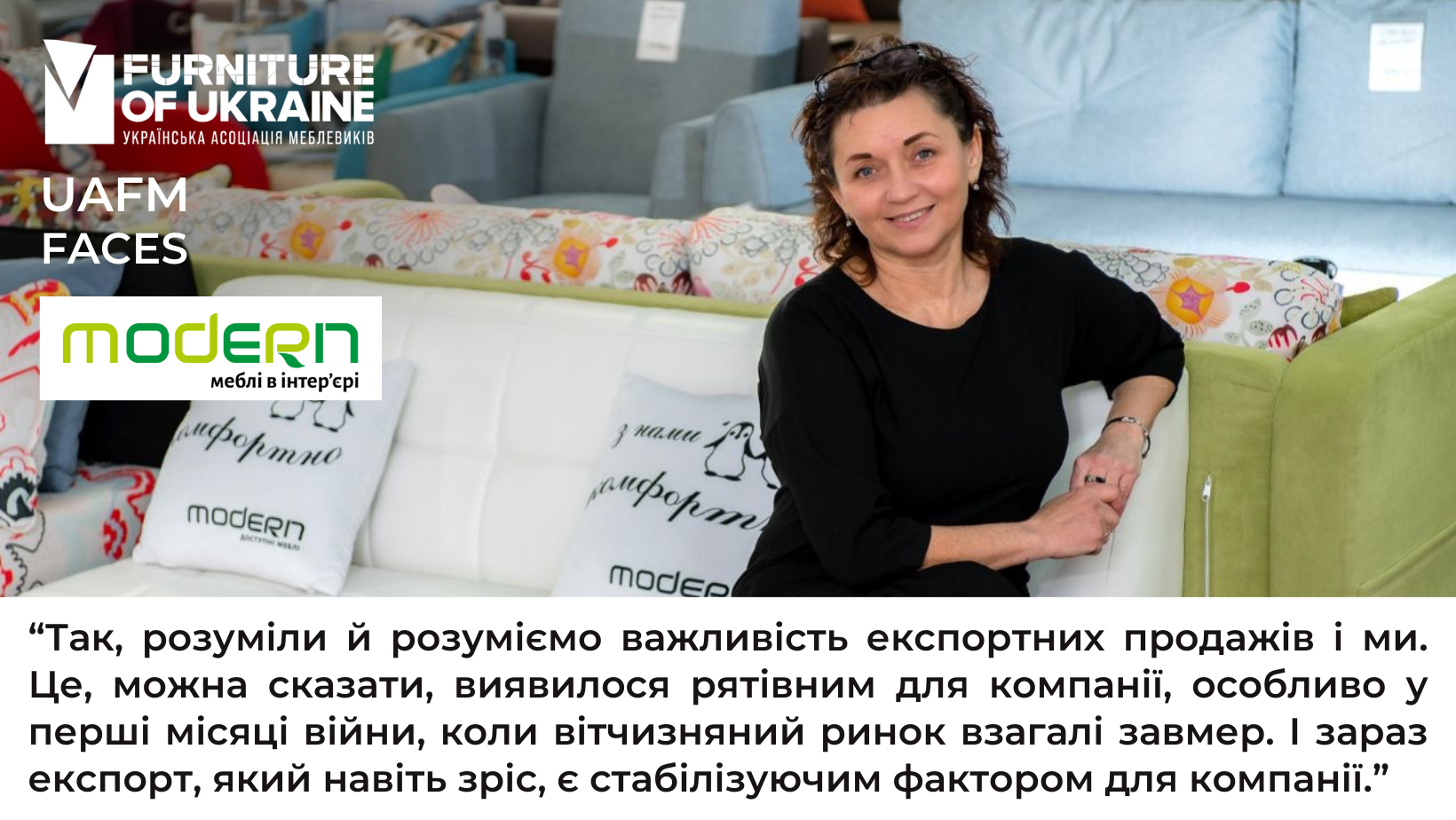
– Yes, we understood and understand the importance of export sales. And this, one might say, turned out to be a life-saver for the company, especially in the first months of the war, when the domestic market completely froze. And now exports, which have even grown, are a stabilizing factor for the company.
But there are difficulties here too. Not all foreign clients want to work with manufacturers from a warring country on pre-war terms of prepayment. And the other option does not suit us, so in order not to be in constant “tug-of-war” with them, we have remained in trade relations with those who trust us.
We will try to improve relations with particularly cautious ones with the help of the Export Credit Agency, which specializes in insuring export operations. We are now actively working on this possibility.
 manages to avoid the current shortage of qualified employees, in the story of its top manager Tetyana Salii.)